
Morocco’s Water Crisis: Is Desalination the right Solution؟
Can the Casablanca Desalination Plant Save the Kingdom ?

achawari.com
Morocco is facing an existential challenge: a multi-year drought that has depleted dam reservoirs and exhausted groundwater. As we move into 2026, water security has become the nation’s top priority, with all eyes on strategic mega-projects, most notably the Casablanca Desalination Plant.
- A Harsh Reality: Structural Drought and Its Impact
Drought in Morocco is no longer a passing phenomenon; it has become a structural reality dictating public policy. Following consecutive years of record-low rainfall, Moroccan dams have reached critical levels. This has directly impacted the supply of drinking water and irrigation in several basins, particularly the Oum Er-Rbia and Tensift basins.
This situation has led to:
- Declining Agricultural Output: Resulting in price fluctuations for food products.
- Groundwater Depletion: Due to excessive reliance on wells to compensate for the lack of rain.
- Consumption Restrictions: Implementation of strict measures to rationalize water use in major urban centers.
- The Casablanca Plant: A New “Lifeline”
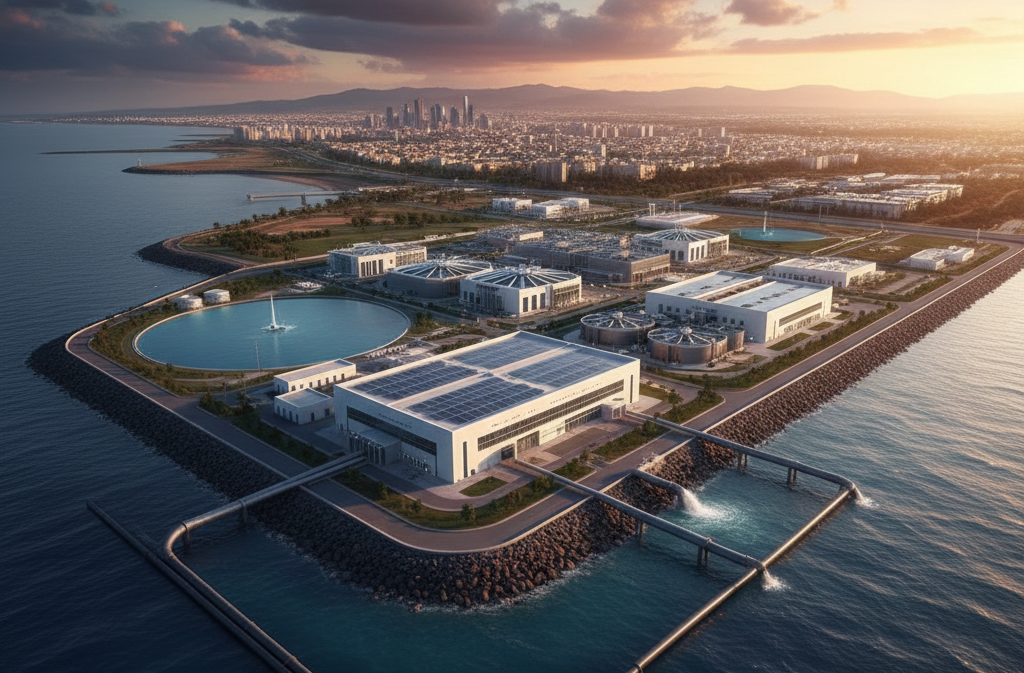
In response to this critical situation, the Casablanca desalination plant stands out as the Kingdom’s most significant strategic gamble. This facility is not just a standard utility; it is the largest of its kind in Africa, designed to secure the water needs of the Casablanca-Settat region, home to a massive population and economic hub.
Key Project Goals and Figures:
- Production Capacity: The plant aims for an ultimate annual production of approximately 300 million cubic meters of drinking water.
- Water Security: The project provides a sustainable alternative, relieving pressure on the “Al Massira” dam, which previously supplied the economic capital. This allows dam water to be diverted toward rural areas and agricultural irrigation.
- Sustainable Technology: The plant utilizes advanced “Reverse Osmosis” technology, with a strong focus on using renewable energy to reduce production costs and environmental impact.
- Field Progress and Future Challenges
Official reports indicate that construction on the Casablanca plant is progressing rapidly according to the established timeline. However, experts agree that desalination alone is not a “magic wand.” It must be part of a comprehensive vision that includes:
- Water Basin Interconnection: Such as the “Water Highway” project linking the Sebou and Bouregreg basins.
- Wastewater Recycling: For irrigating green spaces and stadiums.
- Agricultural Shifts: Moving toward crops that require less water.
- Conclusion: Towards a New Water Culture
The water crisis in Morocco requires the involvement of everyone—institutions and citizens alike. While the state invests billions in desalination plants, “rationalized consumption” remains the most effective and least costly investment. The success of the Casablanca plant will represent a historic turning point in scarcity management and provide Morocco with greater resilience against harsh climate change.
The “Fives” of the Week: 5 Daily Habits to Save Water
- Fix Leaks: A single dripping faucet can waste liters of water every day.
- Night Irrigation: Watering plants at night reduces evaporation by up to 40%.
- Upgrade Fixtures: Use low-flow showerheads and aerators.
- Collective Awareness: Teach children the value of water as the essence of life.
- Rainwater Harvesting: Use simple techniques to collect roof water for gardening.
