

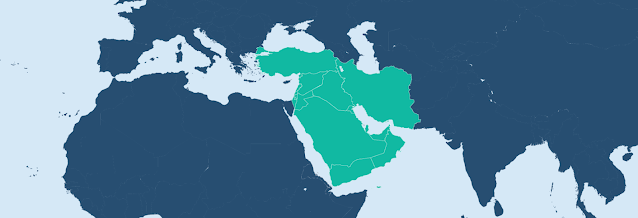

The Middle East, a region of immense historical depth and strategic global
importance, stands at a critical juncture as it approaches 2026. Far
from being a monolith, it’s a dynamic tapestry of nations, each grappling with
unique domestic pressures while being interconnected by regional and
international forces. The coming years promise a complex interplay of
persistent geopolitical challenges and transformative economic and
social opportunities.
For investors, policymakers, and global observers, understanding this
multifaceted landscape is crucial. Middle East trends 2026 point toward
accelerated economic diversification in oil-rich states, a burgeoning digital
revolution across the region, but also heightened geopolitical uncertainty
driven by ongoing conflicts and complex power dynamics.
Geopolitical Challenges: Navigating a Volatile Landscape
Geopolitical stability remains the single most significant determinant of
the Middle East’s trajectory. As regional and global powers recalibrate their
strategies, the risk of flare-ups and the persistence of long-standing
conflicts cast a shadow over future prospects.
H3: Persistent Conflict and Regional Tensions
Ongoing conflicts, particularly those linked to the Israel-Gaza crisis and
their ripple effects, continue to destabilize the broader region. The risk of
conflict expansion or intensification, including in areas like the Red Sea,
directly impacts global trade and tourism, putting strain on the economic
outlook of several countries. Furthermore, internal conflicts and political
fragility in nations like Sudan and Yemen demand immediate humanitarian and
diplomatic attention, diverting resources and attention from long-term
development.
H3: The Geopolitical Chessboard and Energy Transition
The interplay between major regional actors (like Saudi Arabia, Iran, the
UAE, and Türkiye) and global powers (the US, China, and Russia) is becoming
more complex. While diplomatic rapprochement efforts continue—a significant Middle
East opportunity for de-escalation—the underlying competition for influence
and security guarantees persists. Concurrently, the global shift towards
renewable energy poses a long-term challenge for oil-exporting nations.
While they are actively diversifying their economies, maintaining fiscal
stability during this energy transition requires careful policy
calibration and continued cooperation within groups like OPEC+.
Economic Opportunities: Diversification and Digital Transformation
Despite the security risks, the Middle East economy is poised for
growth in 2026, driven by deliberate policies aimed at reducing reliance on
hydrocarbons and embracing the digital revolution. Forecasts for Gulf
Cooperation Council (GCC) countries, in particular, anticipate stronger
economic momentum, supported by robust non-oil sector growth and the
expected gradual easing of voluntary oil production cuts.
H3: Mega-Projects and Infrastructure Investment
The ambition of large-scale national visions—such as Saudi Arabia’s
Vision 2030 and the UAE’s Strategic Plan 2031—is translating into
massive infrastructure spending. Projects like Neom in Saudi Arabia and various
sustainable city initiatives across the GCC are creating huge demand for construction,
smart city infrastructure, and green technologies. These
mega-projects serve as anchors for economic growth, attracting significant Foreign
Direct Investment (FDI) and positioning the region as a resilient global sourcing
hub.
H3: The Surge of Technology and Innovation
Digital transformation is a major theme across the Middle East. Artificial
Intelligence (AI) adoption is accelerating, with regional spending forecast
to grow substantially. This technology is being leveraged to drive efficiency
in key sectors like oil and gas, and to enhance government services and
business applications.
·
Fintech &
E-commerce: With a young, tech-savvy population and high smartphone
penetration, the Fintech and e-commerce sectors are expanding
rapidly. Digital payments, online retail, and innovative financial services are
booming, creating a vibrant startup ecosystem, particularly in the UAE and
Saudi Arabia.
·
EdTech & HealthTech:
The demand for quality education and advanced healthcare, combined with
digitalization, is fostering growth in Education Technology (EdTech) and
Health Technology (HealthTech). These sectors offer significant business
opportunities for specialized foreign companies and local entrepreneurs.
H3: Renewable Energy and Sustainability
The MENA region is home to vast solar and wind potential. The commitment to renewable
energy initiatives is no longer just about environmental stewardship; it’s
a core component of economic diversification and climate resilience.
Investments in solar farms, green hydrogen, and sustainable urban development
are creating a new economic pillar, driving the demand for specialized
“green skills” and technological partnerships. The pursuit of net-zero
targets is opening up markets for climate technology and sustainable urban
planning.
Social and Demographic Shifts: The Human Capital Challenge
The region is undergoing rapid demographic change, presenting both a
dividend and a significant policy challenge. The population is relatively
young, yet the pace of demographic transition is accelerating faster
than in many other regions, leading to an aging population profile in the
medium term.
H3: The Youth Unemployment Imperative
While the working-age population is expanding, youth unemployment
remains a critical challenge, especially in non-GCC countries. The sheer volume
of new workers entering the market necessitates annual job growth rates that
many economies struggle to meet. The World Bank emphasizes that tackling this
requires accelerating structural reforms, strengthening the private sector, and
providing the green skills and digital literacy required for the jobs of
the future.
H3: Empowering Women in the Workforce
A crucial social opportunity lies in increasing female labor force
participation (FLFP), which is currently the lowest globally. Studies
indicate that removing barriers to women’s economic inclusion—including social
norms, legal frameworks, and labor market rigidities—could boost per capita GDP
significantly in many regional economies. Countries across the GCC are actively
pursuing reforms to incentivize and protect women’s entry into the labor
market, recognizing the economic imperative of fully utilizing their human
capital.
Conclusion: A Future Defined by Choice
The Middle East in 2026 is operating at a true crossroads. The challenges
of geopolitical instability, conflict, and the imperative to create enough jobs
for a rapidly growing youth population are undeniable. However, the momentum
behind economic diversification, driven by national visions and
significant investments in technology, infrastructure, and renewable energy,
offers profound opportunities.
The ultimate trajectory will be defined by the policy choices made today.
Success hinges on a sustained commitment to structural reform, fostering
regional de-escalation, and making strategic investments in human capital—especially
in education and the empowerment of women and youth. For global stakeholders,
the Middle East represents a market of immense growth potential, but one that
requires a nuanced understanding of its risks and a long-term commitment to its
transformative journey.
Frequently Asked Questions (FAQ)
Q1: What are the main economic drivers in the Middle East besides oil in
2026?
The main drivers of non-oil growth are massive infrastructure
spending (mega-projects like Neom), the rapid expansion of the Fintech
and E-commerce sectors, significant investments in renewable energy
(solar, green hydrogen), and a burgeoning tourism and entertainment
industry, particularly in the GCC states.
Q2: How does geopolitical risk affect Middle East investment?
Geopolitical risk leads to high uncertainty, which can deter Foreign
Direct Investment (FDI) and disrupt key economic arteries like global shipping
and trade routes (e.g., the Red Sea). While oil-rich nations have strong
financial buffers, conflicts in surrounding regions can impact tourism and
trade for all neighbors.
Q3: Which technological sectors offer the best opportunities in the Middle
East in 2026?
The most promising Middle East technology sectors are Artificial
Intelligence (AI), with significant government backing and enterprise
adoption; Fintech; Cybersecurity, due to increased
digitalization; and specialized HealthTech and EdTech solutions.
Q4: What are the primary demographic challenges facing the region?
The key challenges include persistently high youth unemployment rates
in many non-GCC countries, and the need to manage a rapidly accelerating demographic
transition (aging population) which will place future strain on healthcare
and pension systems. The low rate of female labor force participation is
also a major economic constraint.
Q5: Will the Middle East achieve its economic diversification goals by
2026?
By 2026, many GCC countries are expected to show tangible progress in
economic diversification, particularly through the growth of non-oil
sectors and the implementation of mega-projects. Full realization of goals like
Saudi Vision 2030 or UAE 2031 is a long-term process, but 2026 represents a
period of accelerated execution and visible development.
Quality Assurance: At our platform, we combine cutting-edge AI insights with human expertise. While this article utilized AI tools for initial research, every recommendation and insight has been manually verified by our experts to ensure it meets our high standards of quality and helpfulness.

