


Have your Say

In an era where authoritarian regimes increasingly use
sophisticated technology to control narratives, the most potent weapon of the
people is often found in the stroke of a brush or a pixel on a screen. Visual culture is no longer just a
mirror reflecting society; it is a hammer used to shape it. From the “blue
bra” stencils of the Arab Spring to the high-stakes digital protest art of
2025, art as political resistance is a global phenomenon that refuses to be
silenced.
Authoritarianism thrives on a “monopoly of
meaning”—the idea that there is only one story, one leader, and one truth.
Visual resistance shatters this by introducing ambiguity, emotion, and
alternative futures.
The Architecture of Dissent: Reclaiming Public Space
Authoritarian
governments view public space as a canvas for state power—monumental statues
and propaganda posters that demand obedience.
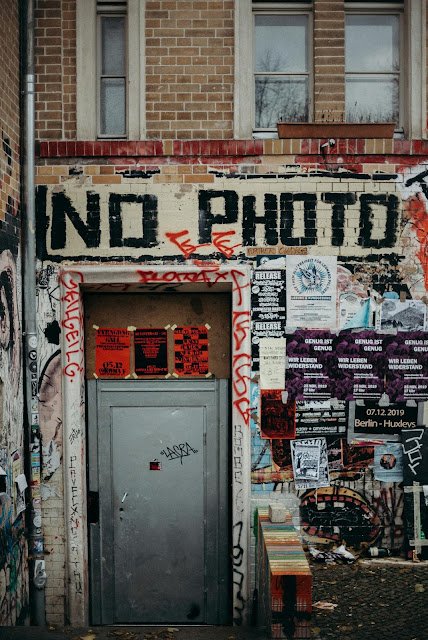
Street art and graffiti
function as the “underclass’s revenge,” reclaiming these spaces for
the people.
·
Tbilisi,
Georgia (2024-2025): Recent protests against the
“foreign agents” law saw a surge in political graffiti.
“scream of resistance,” using symbols like the EU and Ukrainian flags
to counter the ruling party’s pro-autocracy shift.
·
Power of the Stencil: Because speed is
essential in high-risk environments, stencils allow for the rapid-fire
dissemination of symbols. This “visual shorthand”
creates a sense of community and solidarity among citizens who might otherwise
feel isolated by fear.
Visual Sabotage: Mockery as a Political Weapon
One of the greatest fears of an autocrat is being laughed
at. Political satire and “debate-bait” art strip away the aura of
invincibility that regimes work so hard to maintain.
1.
Subverting
State Icons: Artists like Ai Weiwei have famously used the “middle finger” motif
against monuments of power, from Tiananmen Square to the White House.
This act of “visual disobedience” reminds the
public that no institution is above critique.
2.
Aesthetics
of Ambiguity: Unlike state propaganda,
which is heroic and unambiguous, resistance art is often messy and complex. By
creating work that “means five things at once,” artists force viewers
to think critically—the very opposite of the unthinking obedience demanded by
authoritarianism.
Digital Resistance: The New Frontier of Protest
In 2025, the battlefield has shifted to the digital
sensorium. Digital protest art
can bypass physical borders and reach millions before a regime’s censors even
wake up.
·
Viral
Iconography: During movements like the Arab
Spring, specific images—like the blue bra stencil—became global symbols of
state brutality.
These images serve as “visual anchors” that
keep a movement’s momentum alive even when physical protests are crushed.
·
The
Pixel as Protest: Digital artists now
use NFTs, social media filters, and viral memes to create decentralized
resistance. This “plexus of sociopolitical change” allows for global
collaboration, linking struggles for freedom from Tehran to Caracas.
“Trying to avoid politics in art is like trying to
dodge raindrops on a rainy day.” — Zakes Mofokeng
The “Body” as a Site of Resistance
When speech is banned and canvases are confiscated, the
human body becomes the ultimate medium. Performance art often uses physical vulnerability
to highlight the violence of the state.
·
Extreme
Protest: Artists like Pyotr Pavlensky have
used self-mutilation and high-risk stunts to symbolize the apathy of the masses
and the cruelty of the legal system.
·
Queer
Visibility: In regimes that demand heteronormativity, the mere presence of
queer bodies in art is an act of resistance.
marginalized communities challenge the “purity” narratives used by
autocrats to mobilize fear.
Conclusion: Why Art Cannot Be Erased
Authoritarian
governments don’t hate art; they hate dissent.
They will build museums and
commission grand statues, but they fear the art they cannot control.
Whether it is a tapestry with a hidden message or a
viral meme, visual culture remains the most resilient form of political
participation. It creates a “counter-public“—a space where the truth
is told, trauma is processed, and the future is reimagined.
·

