

achawari.com
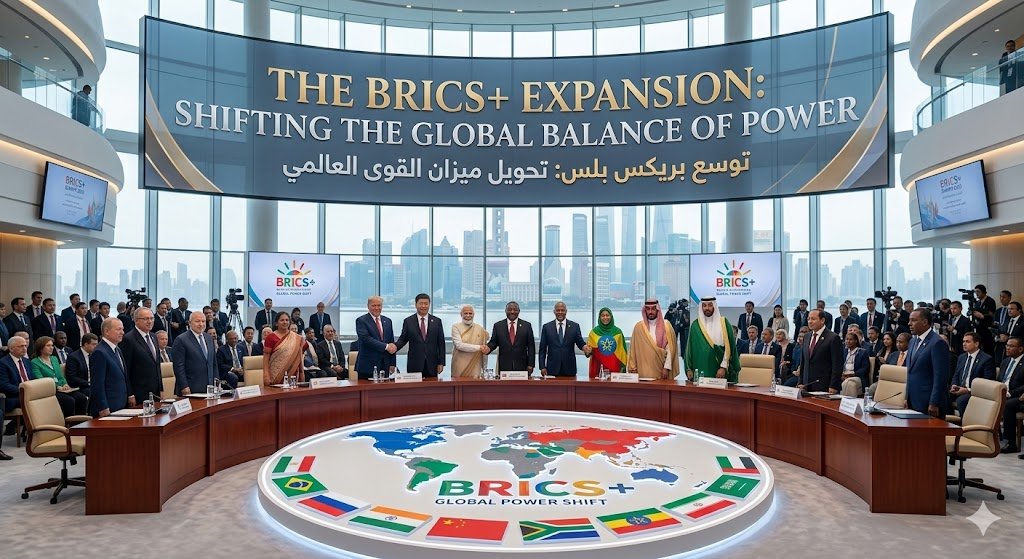
In the rapidly evolving geopolitical landscape of 2026, the traditional hegemony of Western-led institutions is facing its most significant challenge since the end of the Cold War. The expansion of the BRICS bloc—now commonly referred to as BRICS+—has moved from a theoretical ambition to a formidable reality, fundamentally altering the trajectory of global trade, diplomacy, and finance.
The New Architecture of the Global South
What began as an acronym for four emerging economies (Brazil, Russia, India, and China) has transformed into a diverse coalition representing over 45% of the world’s population and a combined GDP that, in purchasing power parity (PPP) terms, now surpasses that of the G7. The inclusion of energy titans like Saudi Arabia, Iran, and the UAE, alongside strategic gateways like Egypt and Ethiopia, has turned BRICS+ into a heavyweight in the global commodities market.
De-Dollarization and Financial Autonomy
A central pillar of the BRICS+ strategy is the reduction of reliance on the U.S. Dollar. By promoting trade in local currencies and strengthening the New Development Bank (NDB), the bloc is creating an alternative financial infrastructure. This shift is not merely about economics; it is an insurance policy against Western sanctions and a move toward a “multipolar” monetary system.
- Local Currency Settlements: Members are increasingly bypassing the SWIFT system for bilateral trade.
- Commodity Control: With major oil and gas producers inside the tent, the bloc has unprecedented leverage over global energy pricing.
- Infrastructure Investment: The NDB provides an alternative to the IMF and World Bank, offering loans without the stringent political conditionalities often imposed by Western lenders.
Strategic Challenges and Internal Cohesion
While the expansion signals strength, it also introduces complexity. The bloc must navigate internal rivalries—most notably the complex relationship between India and China—and the varying economic stabilities of its newer members. However, the shared desire for a “more equitable global order” serves as a powerful glue that keeps the coalition focused on systemic reform.
The G7 Response: Competition or Collaboration?
The West’s reaction to BRICS+ has shifted from skepticism to strategic concern. We are witnessing a “new era of competition” where the G7 is attempting to re-engage with the Global South through initiatives like the Partnership for Global Infrastructure and Investment (PGII). The competition for influence in Africa, Southeast Asia, and Latin America has never been more intense.
Future Outlook: Toward 2030
As we look toward the end of the decade, BRICS+ is likely to continue its path of institutionalization. Discussions regarding a unified BRICS currency or a digital payment platform are gaining momentum. Whether or not a single currency emerges, the “Alternative Order” is here to stay, ensuring that the voices of emerging economies are no longer peripheral but central to global decision-making.
