

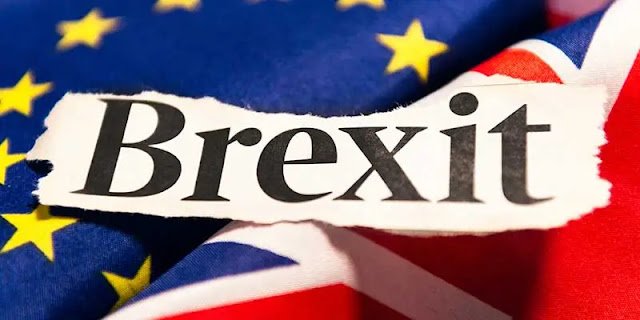

The United Kingdom’s decision to leave the European
Union—a process colloquially known as Brexit—was not merely a policy
change; it was a seismic political event whose repercussions continue to
reshape the continent.
Far from being an isolated incident, the withdrawal of the UK, a major economic
and geopolitical power, set in motion long-term political trends that
challenge the fundamental structure, cohesion, and future direction of the
European project.
Understanding
the full extent of Brexit’s long-term impact on Europe’s political landscape
requires moving beyond the immediate economic headlines and delving into the
profound shifts in continental politics, the balance of power, and the
ideological battle for the EU’s soul. This analysis explores the enduring
political consequences, from the bolstering of EU unity to the
amplification of populist movements and the re-calibration of European
security and foreign policy.
The Unexpected Strengthening of EU-27 Cohesion
A central narrative in the lead-up to the 2016 referendum was that a ‘Leave’
vote would trigger a domino effect, leading other member states to also seek
exit. This so-called “contagion effect“ was a significant fear
in Brussels. However, in the years following the vote, the political reality
unfolded in a counter-intuitive manner.
The ‘Wake-Up Call’ Effect
Instead of inspiring more exits, Brexit arguably functioned as a ‘wake-up
call’ for the remaining EU-27. The protracted, often painful, and
economically complex process of divorce served as a stark demonstration of the
costs of leaving. For many Eurosceptic movements in other countries, the clear
decline in the UK’s global standing and the domestic political turmoil made a
similar move less appealing to their electorates.
·
Renewed Political Will:
Leaders across the continent showed a unified front during the
withdrawal negotiations, prioritizing the integrity of the Single Market
and the foundational principles of the EU over making concessions that might
encourage ‘cherry-picking’ or set a precedent for future departures. This unity
was, paradoxically, strengthened by the external challenge posed by Brexit.
·
Deepening Integration:
The departure of the UK, which was often a brake on deeper Eurozone
integration and a critical voice against an ‘ever closer union,’ has
removed a key obstacle. Discussions around greater fiscal integration
and enhanced common security and defense policy (CSDP) have gained
momentum, unburdened by Britain’s traditional reluctance.
The Re-alignment of the EU’s Political Balance of Power
The UK was not just a large member state; it was a key liberal-leaning
counterweight to the Franco-German axis, particularly on matters of free
trade, budget size, and market deregulation. Its exit has fundamentally altered
the internal political geometry of the Union.
The Rise of the Franco-German Core
With the UK gone, the Franco-German engine—the traditional driving
force of European integration—is more dominant than ever in setting the
strategic agenda.
·
Germany’s Stature:
Germany’s already substantial economic and political influence is further
magnified. It now often takes the lead in managing external crises and
coordinating common responses, though this prominence also draws scrutiny and
political resistance from smaller member states wary of a German hegemony.
·
France’s Strategic Role:
France, traditionally an advocate for greater political sovereignty and defence
integration, has found more receptive ears for its proposals in the
post-Brexit environment. The focus on European strategic autonomy in
defence and foreign policy has become a cornerstone of the EU agenda.
Shifting Ideological Blocs
The UK’s departure shifted the ideological balance within the European
Parliament and the Council. The loss of a staunchly free-market, Eurosceptic,
and traditionally non-Eurozone member has created a subtle but measurable tilt:
·
Toward Social Europe?
The loss of UK Conservative MEPs (Members of the European Parliament) and the
UK government’s liberal economic stance has weakened the overall
conservative/liberal bloc, potentially creating space for a slight move towards
a more socially-focused Europe—one with greater regulation, stronger worker
protections, and a potentially larger common budget.
·
A New North-South
Divide: The political divisions within the EU may increasingly reorient
around a North-South axis (on issues like fiscal rules and Eurozone reform) or
East-West (on rule-of-law and migration policies), rather than being constantly
triangulated by the internal debate on the UK’s place.
The Amplification of Populism and Sovereignty Debates
While the ‘contagion effect’ of full exit was muted, Brexit provided a
powerful ideological and rhetorical blueprint for Eurosceptic and populist
movements across the continent.
The Sovereignist Narrative
Brexit successfully framed the act of leaving an
international treaty as a reclaiming of “national sovereignty”
and “taking back control.” This language resonated deeply with
populist parties, who now use it to challenge the EU’s legitimacy on issues
like migration, national budgets, and domestic law.
·
Internal
EU Challenges: Instead of demanding an exit, many populist parties now
advocate for a de facto internal weakening of the EU—pushing for the repatriation
of powers, challenging the supremacy of EU law over national law,
and resisting further integration. Countries with
populist governments pose a more nuanced, but arguably more persistent,
challenge to the EU’s coherence from within its structures.
·
Normalisation
of Anti-EU Rhetoric: The fact that a major Western democracy successfully
left the bloc has—to a degree—normalised the open and aggressive questioning of
the European project’s utility and core values, shifting the terms of
the political debate in many national capitals.
Geopolitics, Defence, and the Global Stage
The political impact of Brexit extends far beyond the borders of the EU and
the UK; it has implications for the global geopolitical order and European
security.
Diminished Collective Clout
The simultaneous loss of a major global diplomatic player (the UK) and a
persistent internal voice for free trade has inevitably reduced the EU’s
collective weight on the global stage.
·
Foreign Policy
Coordination: While the UK remains a key NATO partner, its absence from the
EU Council’s foreign policy debates means one less major voice in coordinating
collective European responses to global crises, from Russia and China to the
Middle East. The challenge is now for the EU-27 to rapidly fill this gap and
ensure that the loss of the UK’s diplomatic and intelligence resources doesn’t
compromise a unified European foreign policy.
·
Defence and Security: The UK’s military is one of the continent’s strongest.
Post-Brexit, the EU has intensified efforts on Permanent Structured
Cooperation (PESCO) and the European Defence Fund, driving the
ambition for strategic autonomy. The political challenge lies in finding
effective ways for the EU and the UK to cooperate closely on security outside
the institutional framework, a necessity given the shared security threats.
The Future Trajectory of European Integration
The lasting legacy of Brexit on Europe’s political landscape is the
definitive end of the assumption that European integration is an irreversible,
linear process.
The political trajectory is now defined by two key dynamics:
1. Differentiated Integration: The EU is increasingly moving
towards a model of ‘Europe à la carte,’ or “differentiated
integration,” where not all member states participate in every policy
area (e.g., the Eurozone, Schengen, PESCO). Brexit has made this multi-speed
Europe a political necessity, allowing a core group of member states to deepen
cooperation without being held back by those who prefer a looser arrangement.
2. The Sovereignty-Efficiency Trade-off: The political
debate is now perpetually focused on finding a new, sustainable balance between
national sovereignty and the efficiency of collective action at
the EU level. Every major policy decision—from vaccine procurement to climate
policy—is framed by this post-Brexit realization. The political task for EU
leaders is to make the EU more visible and responsive to citizens, thereby
legitimizing the pooling of sovereignty necessary for effective collective
responses to global challenges.
Conclusion: A Continent Remade
Brexit was a monumental political event that did not lead to the EU’s
collapse but instead served as a powerful catalyst for change. In the long
term, its impact on Europe’s political landscape is characterized by greater
unity among the remaining 27 members, a realigned balance of power
favouring the Franco-German axis, and a permanent, amplified debate over
sovereignty and the European project’s fundamental legitimacy. The EU has
emerged from the withdrawal process more institutionally self-aware,
strategically ambitious, and politically resilient, but the forces of populism
and national interest—galvanized by the Brexit precedent—will continue
to test its cohesion for years to come. The political future of Europe is now
one of deepening core integration alongside persistent internal challenges, all
within a dramatically altered geopolitical reality.
Frequently Asked Questions (FAQs)
Q1: Has Brexit inspired other countries to leave the EU?
A: No, the feared “contagion effect” has largely
failed to materialise. The prolonged negotiations, the clear economic costs,
and the associated political turmoil in the UK have generally deterred other
Eurosceptic political parties from actively campaigning for a full exit (a
“Grexit,” “Frexit,” or “Dexit”). Instead, the
dominant trend among populist parties is to advocate for internal reform
or the repatriation of specific powers rather than outright departure.
Q2: How has the political balance of power shifted in the EU without the
UK?
A: The main shift is the increased centrality of the Franco-German
partnership. The UK was often a crucial counterweight on issues like free
trade, the EU budget, and deregulation. Without it, the EU’s internal dialogue
is less contested by a major liberal-market advocate, potentially paving the
way for a more unified stance on defence cooperation and Eurozone
fiscal integration.
Q3: What is “differentiated integration” and how is it a long-term
impact of Brexit?
A: Differentiated integration (or ‘multi-speed Europe’) is a
political concept where not all EU member states participate in all areas of
policy. Examples include the Eurozone and the Schengen Area. Brexit’s political
legacy is the normalisation of this concept, demonstrating that a
‘one-size-fits-all’ model is politically unsustainable. The EU is likely to see
further deepening of cooperation (e.g., in defence or fiscal policy) among a core
group of willing members while others remain on the periphery.
Q4: What is the primary political challenge the EU faces in the long-term
post-Brexit?
A: The primary challenge is managing the ongoing political tension
between national sovereignty and EU-level efficiency. Brexit amplified
the demand for national control among domestic electorates. The EU’s long-term
political success hinges on its ability to demonstrate that the benefits of
collective action (on climate change, security, trade, etc.) outweigh the
perceived loss of sovereignty, thereby legitimizing the European project in the
eyes of its citizens.
Quality Assurance: At
our platform, we combine cutting-edge AI insights with human expertise. While
this article utilized AI tools for initial research, every recommendation and
insight has been manually verified by our experts to ensure it meets our high
standards of quality and helpfulness.

