

 |
| Mr Bean |
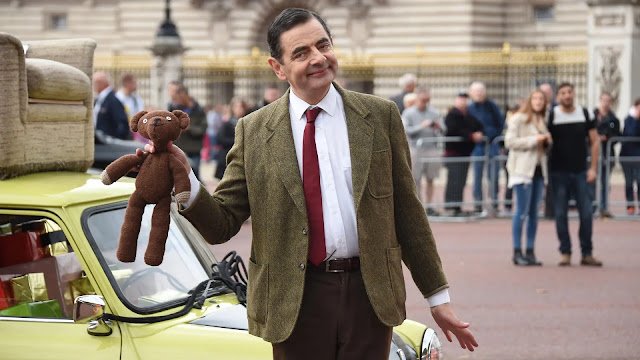
He’s a global icon. A lanky, tweed-clad man-child who communicates in a
series of grunts, squeaks, and exasperated sighs. With his loyal teddy bear and
perpetually unfortunate green Mini, Mr. Bean is arguably Britain’s most
successful comedy export of all time. The original television series, though
comprising only 15 episodes, has been sold to over 245 territories worldwide
and continues to gather billions of views online.
Voiced by the inimitable Rowan Atkinson, Mr. Bean is a masterclass in
physical comedy, a character who can make you cry with laughter without
uttering a single coherent sentence. Yet, in the decades since he first bumbled
onto our screens in 1990, a curious question has emerged: Where is his
successor? Why has the famously fertile ground of British comedy, which gave us
everything from Monty Python to The Office, failed to produce
another silent, physical comedy character with the same global reach?
The answer isn’t a simple one. It’s a complex tapestry woven from a changing
media landscape, evolving comedic tastes, and the singular, inimitable genius
of Rowan Atkinson himself.
The Unique Perfect Storm That Created Mr. Bean
To understand why Mr. Bean is such a rare phenomenon, we first need to
appreciate what made him so special. He wasn’t just a funny character; he was
the product of a unique set of circumstances and talents.
H3: A Masterclass in Visual Storytelling
At its core, Mr. Bean is a modern-day Charlie Chaplin or Jacques Tati.
The comedy is almost entirely visual. Think of the classic sketches: Mr. Bean
trying to change into his swimming trunks on the beach without getting
undressed, falling asleep in church, or cooking a Christmas turkey with his
head stuck inside it.
These gags require no translation. They are universally understood because
they tap into basic human experiences: social awkwardness, frustration with
inanimate objects, and the simple joy of a clever (or disastrous) solution to a
mundane problem. Rowan Atkinson, who famously holds a Master’s degree in
Electrical Engineering, meticulously plotted these gags with the precision of
an engineer, ensuring every beat and physical movement was perfectly timed for
maximum comedic effect.
H3: The Power of Silence and Universal Appeal
The most crucial factor in Mr. Bean’s global conquest was his near-total
lack of dialogue. In a world of wit, wordplay, and culturally specific
references that often define British humour, Mr. Bean was an anomaly. His
silence was his passport. A joke about the British class system might fall flat
in Tokyo, but a man battling a pesky wasp will be funny anywhere on Earth.
This made the show incredibly easy and cheap to export. Broadcasters didn’t
need to worry about dubbing or subtitles. The humour was pure, primal, and
universally accessible, allowing him to connect with audiences from London to
Lagos to Lima.
H3: The Child in a Grown Man’s Body
Mr. Bean is the ultimate “everyman,” but with a twist. He is a
fully grown adult navigating the world with the innocence, selfishness, and
bizarre logic of a small child. He experiences recognisable adult
problems—going to the dentist, taking an exam, doing laundry—but his approach
is utterly alien. This blend of the relatable and the surreal is what makes him
so endearing and hilarious. We see our own petty frustrations in him, but we’d
never dare solve them the way he does.
The Shifting Sands of the Comedy Landscape
The world that made Mr. Bean a superstar no longer exists. The very
foundations of how we create and consume comedy have been completely
revolutionised, making a modern equivalent almost impossible to imagine.
H3: The Rise of Verbal and Observational Comedy
In the 1990s, sketch shows and character-led sitcoms were king. Today, the
dominant forms of British comedy are far more verbal and nuanced. From the
cringe-inducing social commentary of Ricky Gervais‘s The Office to the
fourth-wall-breaking, witty despair of Phoebe Waller-Bridge’s Fleabag,
modern classics are built on sharp dialogue, complex characters, and relatable,
often cynical, observations.
A silent, slapstick character feels almost quaint in this new world. TV
commissioners today are looking for the next great script, the next razor-sharp
writer, not the next great mime. Physical comedy hasn’t disappeared, but
it has been relegated to a supporting role rather than the main event.
H3: The Fragmented Media World
Mr. Bean was born in the era of appointment television. When a new episode
aired on a major terrestrial channel like ITV, a huge portion of the country
was watching at the same time. It was a shared cultural event.
Today, the audience is hopelessly fragmented. We have hundreds of channels,
and streaming giants like Netflix, Disney+, and Amazon Prime Video all vying
for our attention. On top of that, you have YouTube, TikTok, and Instagram,
where comedy exists in bite-sized, 30-second clips. A new character could become
a viral TikTok star, but it’s incredibly difficult for them to achieve the kind
of deep-rooted, global cultural saturation that Mr. Bean enjoyed. There is no
longer a single, unified stage for a global star to be born.
H3: The Economics of Production
Believe it or not, a show like Mr. Bean is incredibly difficult and
expensive to make. Each sketch is like a mini-movie, often shot on location
with complex, perfectly timed stunts and gags. It takes far longer to write,
rehearse, and shoot a meticulously choreographed physical sequence than it does
to film two actors talking in a room. In today’s fast-paced, budget-conscious
TV industry, a dialogue-driven sitcom filmed on a single set is a much safer
and more efficient bet for producers. Pitching a virtually silent comedy series
to a major network today would be a monumental challenge.
Rowan Atkinson’s Unmatchable Shadow
Finally, we cannot ignore the man in the tweed jacket himself. The absence
of a new Mr. Bean is also a testament to the sheer, once-in-a-generation talent
of Rowan Atkinson.
Atkinson is Mr. Bean. The character came from his own mind, developed
during his time at Oxford University. His uniquely expressive, rubbery face and
gangly physicality are the instruments through which the comedy is channelled.
It’s a performance so definitive, so total, that any attempt to create a
similar character would inevitably be seen as a cheap imitation.
It’s like asking why there hasn’t been another Freddie Mercury or another a
Muhammad Ali. Some talents are so iconic that they don’t create a genre; they are
the genre. Any new British physical comedian would be instantly and unfairly
compared to Atkinson, a bar so impossibly high that it likely discourages
creators from even trying.
Conclusion: A Timeless Classic, Not a Replicable Formula
So, why hasn’t British comedy produced another Mr. Bean? Because it can’t.
And perhaps, it shouldn’t.
Mr. Bean was a perfect alignment of a unique talent, a specific comedic
style, and a media environment that no longer exists. The lack of a successor
isn’t a failure of modern British comedy—which remains one of the UK’s most
vibrant and successful cultural exports—but rather a sign of its evolution.
The spirit of physical comedy lives on, but it has found new homes: in
animated characters like Shaun the Sheep, in the background of sitcoms,
and in the short-form visual gags that populate the internet.
Mr. Bean remains a timeless, cherished gem. He is a monument to a simpler
era of television and a testament to the universal power of laughter. We may
never see his like again, but his legacy is secure, forever parked in our
collective memory like a little green Mini in a spot it was never supposed to
be in.
Frequently Asked Questions (FAQ)
Q1: Why is Mr. Bean still so popular today?
Mr. Bean’s popularity endures due to its timeless and universal nature. The
physical comedy and visual gags transcend language and cultural barriers,
making it just as funny today as it was in the 1990s. It’s also clean,
family-friendly humour that can be enjoyed by all ages, which helps it find new
audiences on platforms like YouTube.
Q2: Who actually created the character of Mr. Bean?
Mr. Bean was co-created by Rowan Atkinson and Richard Curtis.
Atkinson developed the character’s physical persona while studying at Oxford
University, and Curtis, a renowned screenwriter (known for Four Weddings and
a Funeral, Notting Hill), helped shape the scenarios and scripts for
the television series.
Q3: Is physical comedy a dead art form?
Not at all. Physical comedy is very much alive, but it has changed form.
While dedicated silent comedy shows are rare, slapstick and physical gags are
still a key component of many modern sitcoms, children’s programming (e.g.,
Aardman’s Shaun the Sheep), and especially short-form online content on
platforms like TikTok and Instagram Reels, where visual humour thrives.
Q4: What are some examples of successful modern British comedies?
Modern British comedy is incredibly diverse and successful. Some critically
acclaimed examples include the poignant and witty Fleabag, the
hilarious and nostalgic Derry Girls, the absurdly brilliant panel
show Taskmaster, and the heartfelt comedy-drama Sex
Education. These shows highlight the modern focus on sharp writing,
complex characters, and innovative formats.
Quality Assurance: At our platform, we combine cutting-edge AI insights with human expertise. While this article utilized AI tools for initial research, every recommendation and insight has been manually verified by our experts to ensure it meets our high standards of quality and helpfulness.

