Digital Nomads in Morocco: Why the Kingdom is Becoming the Silicon Valley of North Africa

achawari.com
Morocco is rapidly emerging as North Africa’s premier tech hub, driven by the “Digital Morocco 2030” strategy and a $142 million investment to create 1,000 startups by 2026. With specialized remote work visas, high-speed fiber, and affordable living, the Kingdom offers a unique “Silicon Valley” ecosystem for global nomads.
Imagine finishing a high-stakes Zoom call with a view of the snow-capped Atlas Mountains, then heading to a surf session on the Atlantic coast—all before sunset. This isn’t just a dream; it’s the daily reality for thousands of remote workers. In 2026, Morocco has officially shed its image as just a tourist postcard to become the Silicon Valley of North Africa, a high-tech oasis where ancient tradition meets 5G-powered innovation.
- The “Digital Morocco 2030” Catalyst
The Kingdom’s transformation isn’t accidental. The government’s Digital Morocco 2030 strategy has injected billions into the economy, targeting the creation of 3,000 startups and 240,000 digital jobs.
- Financial Power: A dedicated $142 million (1.3 billion MAD) fund supports the startup lifecycle, from early-stage venture building to late-stage growth capital.
- Infrastructure: Cities like Casablanca and Rabat now boast average fiber speeds of 150–180 Mbps, rivaling European capitals.
- Remote Work Visas & Legal Clarity
For years, digital nomads operated in a legal gray area. In 2026, Morocco has streamlined the process:
- Tourist Visa (90 Days): Still the go-to for short-term stays, easily extendable.
- Self-Employed Work Visa (ETA): A specific permit for remote workers earning income from abroad, requiring proof of financial stability (typically ~$2,500/month).
- Carte de Séjour: A long-term residency option for those looking to plant roots in the Kingdom’s growing tech scene.
- The Three Pillars: Casablanca, Rabat, and Taghazout
Morocco offers three distinct “flavors” of the nomadic lifestyle, each serving as a specialized hub.
Casablanca: The Economic Engine
Often called the “Silicon Valley” of the country, Casablanca is home to Technopark, which houses over 200 startups. It’s the place for networking with VCs, attending tech meetups, and experiencing a fast-paced “hustle culture.”
Rabat: The Green Tech Capital
Rabat offers a more refined, academic atmosphere. With partnerships through the Mohammed VI Polytechnic University (UM6P), it has become a center for AI research and GreenTech innovation.
Taghazout: The “Work-Surf” Utopia
For those who prioritize wellness, the coastal village of Taghazout has exploded. It features world-class coliving spaces like SunDesk and Blue Waves, where developers and designers trade office chairs for surfboards during lunch breaks.
- Cost of Living & Quality of Life
One of Morocco’s strongest draws remains its affordability. In 2026, a digital nomad can live comfortably on $1,200 to $1,800 per month, covering a modern apartment, high-speed internet, and daily dining at world-class restaurants.
| Expense Category | Monthly Cost (USD) |
| Modern Apartment (City Center) | $500 – $900 |
| Coworking Space Membership | $120 – $200 |
| Groceries & Local Dining | $300 – $400 |
| Utilities & 5G Internet | $60 – $100 |
- A Gateway to Africa
Global giants like Oracle and Plug and Play have established R&D centers in Morocco, recognizing its position as a “bridge” between Europe and Sub-Saharan Africa. For digital nomads, this means working in an environment that is globally connected but locally grounded.
Conclusion
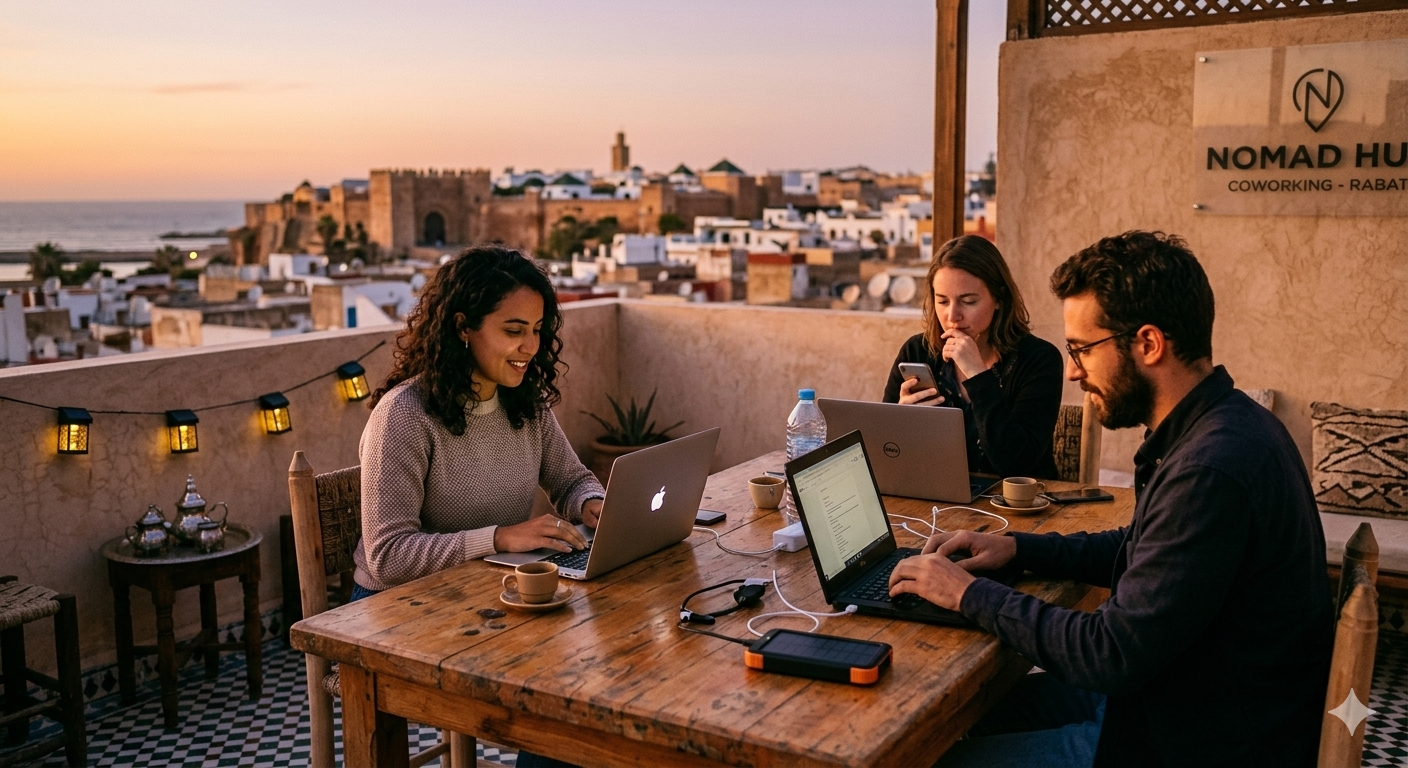
Morocco’s rise as the Silicon Valley of North Africa is more than just marketing; it is a well-funded, infrastructure-backed reality. Whether you are attracted by the booming fintech scene in Casablanca or the tranquil rooftop terraces of Essaouira, the Kingdom offers a perfect blend of professional growth and personal adventure.
