
Climate-Resilient Home Design: Preparing for Extreme Weather

Achawari.com
The climate is shifting, and with it, the definition of a “safe home” is changing. From record-breaking heatwaves and flash floods to intensified wildfires and hurricanes, homeowners are increasingly facing the front lines of environmental volatility.
Climate-resilient home design is no longer a luxury for the eco-conscious; it is a fundamental shift in how we build and renovate to ensure long-term safety, comfort, and financial stability.
- Water Resistance: Defending Against Floods
Flooding is the most common and costly natural disaster. Designing for water resilience involves two primary strategies: “dry flood-proofing” (keeping water out) and “wet flood-proofing” (allowing water to move through without causing structural damage).
- Elevated Living: In high-risk zones, raising the lowest floor above the Base Flood Elevation (BFE) is critical.
- Permeable Landscaping: Replace solid concrete driveways with permeable pavers or rain gardens. This allows the ground to absorb runoff rather than funneling it toward your foundation.
- Sump Pumps and Backflow Valves: Install high-capacity sump pumps with battery backups and check valves to prevent sewage from backing up into the home during heavy rain.
- Fire-Resistant Envelopes
As wildfire seasons lengthen, the materials used on the exterior of a home—the “envelope”—act as the first line of defense against embers and radiant heat.
- Non-Combustible Siding: Materials like fiber cement, brick, or stone are far superior to vinyl or wood in fire-prone areas.
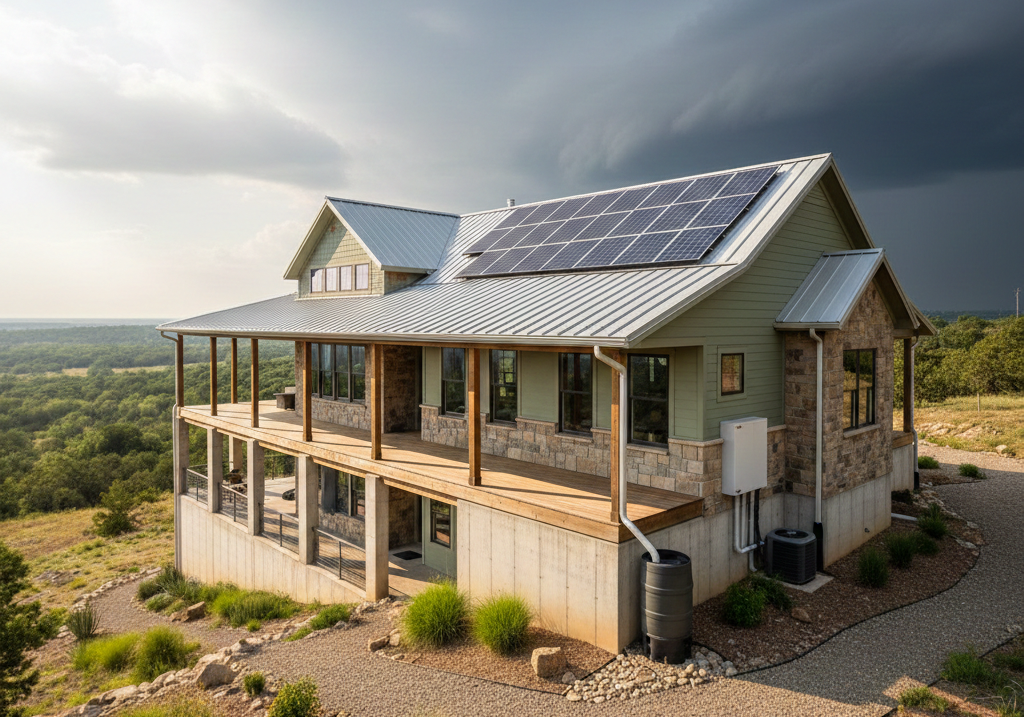
- Class A Fire-Rated Roofing: Metal roofing or specialized asphalt shingles can prevent airborne embers from igniting the roof.
- Defensible Space: Maintain a 30-foot buffer around the home clear of dead vegetation, woodpiles, or highly flammable plants.
- Wind and Storm Integrity
High-wind events, including hurricanes and tornadoes, put immense pressure on a home’s structural connections. Resilience here is about “continuous load paths.”
- Hurricane Straps: These metal connectors tie the roof to the walls and the walls to the foundation, ensuring the house acts as a single, solid unit.
- Impact-Rated Windows: Use laminated glass or permanent storm shutters to prevent pressure changes that can lead to roof failure if a window blows out.
- Aerodynamic Roof Shapes: Hip roofs (sloping on all four sides) perform significantly better in high winds than gable roofs.
- Thermal Resilience: Staying Cool (or Warm) Naturally
Extreme temperatures can strain power grids, leading to blackouts. A resilient home should maintain a livable temperature even without HVAC systems.
- High-Performance Insulation: Superior R-value insulation in walls and attics keeps heat out during summer and traps it during winter.
- Passive Cooling: Strategic window placement for cross-ventilation and the use of thermal mass (like concrete or stone floors) can regulate internal temperatures.
- Reflective Surfaces: “Cool roofs” with reflective coatings bounce sunlight away, reducing the “urban heat island” effect on your property.
- Energy Independence and Redundancy
A climate-resilient home is an independent one. When the grid fails, your home’s systems should continue to function.
- Solar + Battery Storage: Pair solar panels with a lithium-ion battery system to power essential medical devices, refrigeration, and lighting during outages.
- Smart Water Management: Rainwater harvesting barrels and greywater recycling systems provide a backup water source during droughts or municipal system failures.
The ROI of Resilience
While the upfront cost of resilient features can be 5% to 15% higher than standard construction, the return on investment (ROI) is substantial. Homeowners often see:
- Lower Insurance Premiums: Many providers offer discounts for wind-rated roofs or fire-resistant materials.
- Increased Property Value: Modern buyers prioritize “future-proofed” homes.
- Peace of Mind: The intangible value of knowing your family is protected during the next big storm.
