
The European Green Deal: Strategic Opportunities for Tech Investors

achawari.com
The European Green Deal has evolved from a visionary policy framework into the most powerful economic engine on the European continent. As we move through 2026, the transition toward a carbon-neutral economy is no longer just a climate necessity; it has become the single largest investment opportunity of the decade. For global tech investors, Europe is now the primary laboratory where sustainability meets high-stakes profitability.
The Hydrogen Revolution and Smart Infrastructure
One of the most lucrative sectors within the Green Deal is the development of a unified hydrogen economy. Germany, the Netherlands, and Spain have pioneered the “Green Hydrogen Corridors,” and in 2026, the demand for technology that can efficiently produce, store, and transport hydrogen is at an all-time high.
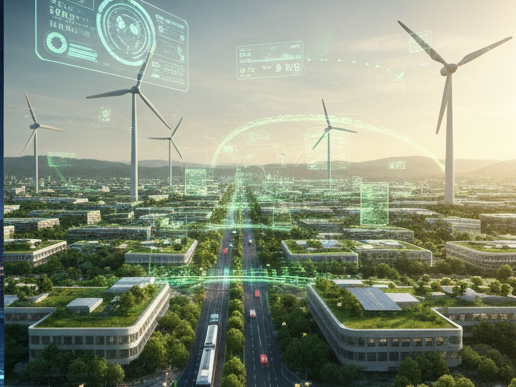
Investors are focusing heavily on AI-driven energy management systems. These “Smart Grids” are essential for balancing the intermittent nature of renewable energy sources like offshore wind and solar power. Companies providing blockchain-based energy trading platforms—where neighbors can sell excess solar power to each other—are seeing record-breaking Series B and C funding rounds across Berlin and Paris.
The Circular Economy: Turning Waste into Wealth
In 2026, Europe’s strict “Circular Economy Action Plan” has turned waste management into a high-tech industry. The legendary European manufacturing sector is being overhauled to follow “cradle-to-cradle” principles. This shift has created a massive market for:
- AI-Powered Sorting: Technology that can identify and separate complex industrial materials for recycling with 99% accuracy.
- Digital Product Passports: Blockchain solutions that track a product’s entire lifecycle, from raw material extraction to final recycling, which is now a mandatory requirement for many products sold in the EU.
- Bio-based Materials: Startups replacing plastics with seaweed and agricultural waste derivatives are attracting massive ESG (Environmental, Social, and Governance) funds.
Sustainable Mobility and the Battery Surge
The European Green Deal has effectively mandated the end of the internal combustion engine. By 2026, the race is on to build the “Battery Gigafactories” of the future. Investors are not just looking at vehicle manufacturers, but at the entire value chain—from lithium recycling technology to ultra-fast charging software. The integration of Vehicle-to-Grid (V2G) technology, where electric cars act as mobile batteries for the city, is a booming sub-sector that is attracting interest from Silicon Valley and beyond.
ESG Integration: The New Financial Standard
For any investor eyeing the European market in 2026, ESG compliance is no longer optional. The European Green Deal has standardized how companies report their environmental impact. This transparency has lowered the risk for institutional investors, as they can now clearly distinguish between “greenwashed” companies and true sustainable innovators. Consequently, firms with high ESG scores in Europe are enjoying lower capital costs and higher market premiums.
Conclusion: Positioning for a Sustainable Decade
The European Green Deal is more than a set of regulations; it is a blueprint for the future of global capitalism. By prioritizing decarbonization and technological innovation, Europe has created a predictable, stable, and highly profitable roadmap for the next twenty years. For the strategic investor, the message is clear: the future of global tech investment is green, and its heart is beating in Europe.
