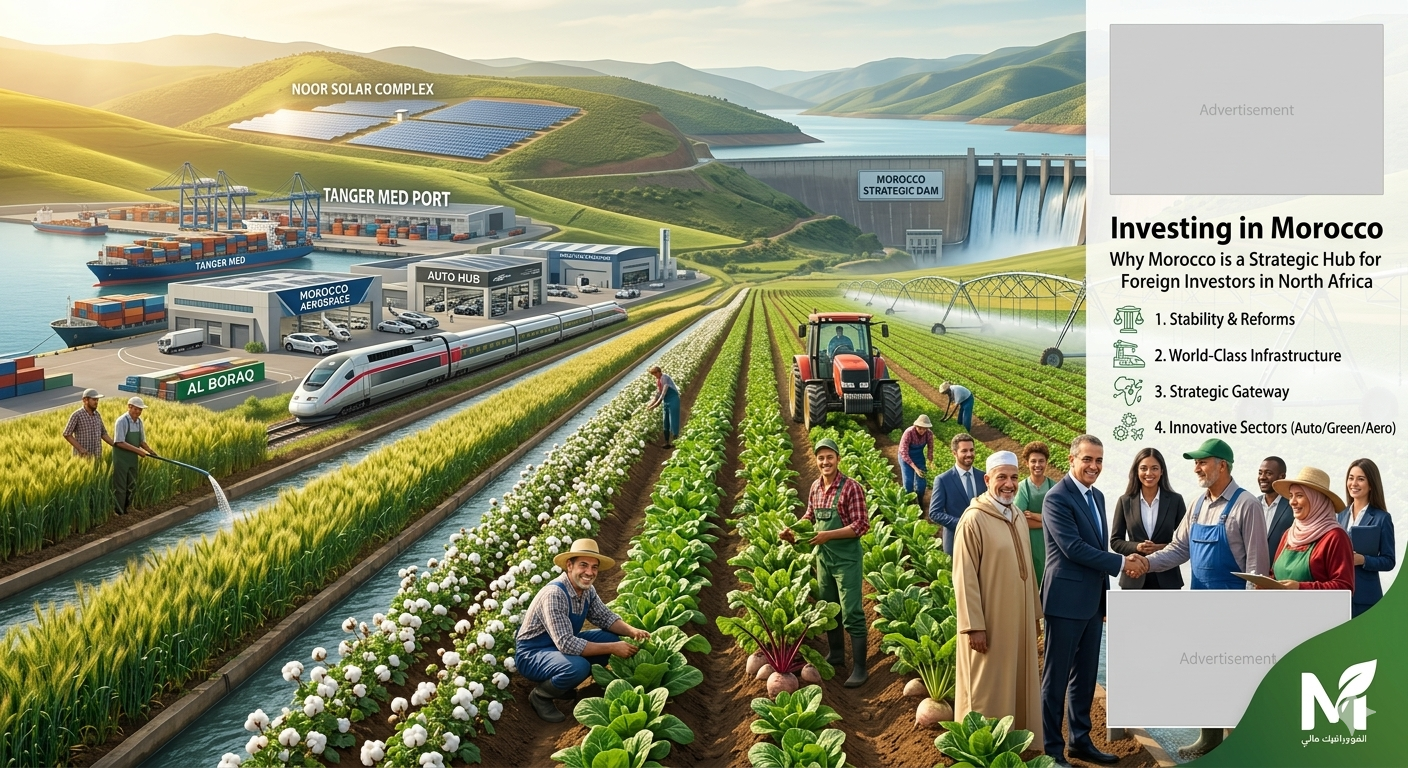
Investing in North Africa: Why Morocco is a Strategic Hub for Foreign Investors
Achawari.com
As global markets become increasingly volatile, savvy investors are shifting their gaze toward emerging economies that offer stability, growth, and geographical advantages. In the heart of the Maghreb, Morocco has emerged as the undisputed “Gateway to Africa,” transforming itself into a sophisticated industrial and financial powerhouse.
If you are considering investing in North Africa, here is why Morocco should be at the top of your list.
1. A Geopolitically Stable Anchor
Unlike several of its neighbors, Morocco has maintained a consistent trajectory of political stability and institutional continuity. Under the leadership of King Mohammed VI, the country has implemented deep-seated structural reforms that provide a predictable environment for long-term capital. For foreign investors, this translates to reduced “country risk” and a legal framework that protects private property and international contracts.
2. World-Class Infrastructure
Morocco’s infrastructure is no longer just “good for the region”—it is world-class.
- Tanger Med Port: Now the largest port in Africa and the Mediterranean, it connects Morocco to over 180 global ports.
- High-Speed Rail (Al Boraq): The first of its kind in Africa, slashing travel times between the economic hubs of Tangier and Casablanca.
- Connectivity: Massive investments in highways and a modernized airport network make internal and international logistics seamless.
3. High-Growth Industrial Clusters
Morocco has moved away from a purely agrarian economy, successfully creating specialized ecosystems:
- Automotive Excellence: Morocco is now the leading passenger car producer in Africa, hosting giants like Stellantis and Renault.
- Aerospace Hub: Over 140 companies (including Boeing and Airbus suppliers) operate in the Midparc zone, benefiting from a highly skilled local workforce.
- Green Energy Leadership: With the Noor Ouarzazate Solar Complex, Morocco is a global leader in renewables, aiming to source 52% of its energy from green sources by 2030. This is a magnet for companies looking to de-carbonize their supply chains.
4. The “Gateway to Africa” Strategy
Morocco isn’t just a market of 37 million people; it is a bridge to 1.3 billion. Through the Casablanca Finance City (CFC), the country serves as the premier financial hub for regional headquarters looking to expand into West and Sub-Saharan Africa. Furthermore, Morocco’s membership in the African Continental Free Trade Area (AfCFTA) and its numerous Free Trade Agreements (including with the US and EU) allow for duty-free access to a massive global consumer base.
5. Incentives and the New Investment Charter
In 2023, Morocco launched a revolutionary Investment Charter. This framework offers significant financial incentives, including:
- Direct investment premiums (subsidies) based on job creation and gender equality.
- Tax exemptions for new companies in strategic sectors.
- Customized support for “Strategic Projects” exceeding certain investment thresholds.
Conclusion
Investing in Morocco is no longer a speculative move; it is a strategic necessity for businesses aiming for a foothold in the future’s fastest-growing continent. With its blend of European-standard infrastructure, African growth potential, and a business-friendly government, the Kingdom stands as the premier destination for investing in North Africa.
