

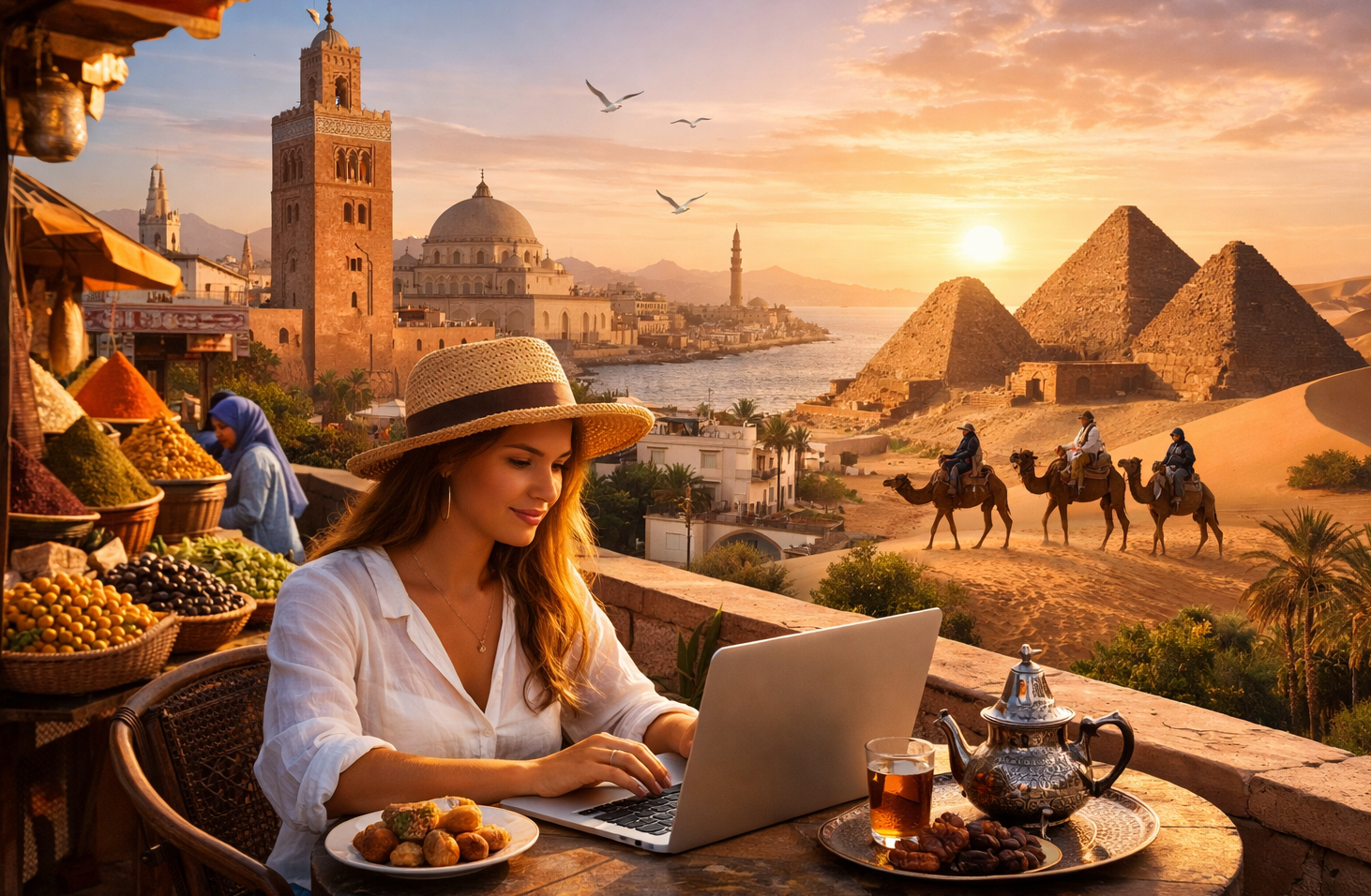
achawari.com
Living in North Africa is an experience shaped by history, geography, culture, and rapid social change. Stretching along the Mediterranean coast and deep into the Sahara Desert, the region includes countries such as Morocco, Algeria, Tunisia, Libya, and Egypt.
In recent years, North Africa has attracted increasing global attention—not only from tourists, but also from expatriates, digital nomads, entrepreneurs, and investors. The relatively low cost of living, combined with a rich lifestyle and emerging economic opportunities, makes the region an appealing destination for long-term residence.
This guide explores what daily life in North Africa truly looks like, how much it costs to live there, and what opportunities exist for residents and newcomers alike.
Cost of Living in North Africa
Housing Costs
Housing is one of the most affordable aspects of living in North Africa. Rent prices vary widely depending on location, city size, and neighborhood.
- City centers: Apartments in major cities are more expensive but still significantly cheaper than in Europe or North America.
- Suburban and rural areas: Housing costs drop dramatically, making home ownership achievable for middle-income earners.
In general, monthly rent for a modest apartment can be 40–70% lower than comparable housing in Western countries.
Food and Daily Expenses
Food is both affordable and high-quality, especially when purchased from local markets.
- Fresh vegetables, fruits, bread, and spices are inexpensive and widely available.
- Eating out is affordable, with traditional restaurants offering full meals at low prices.
- Imported goods cost more, but local alternatives are plentiful.
A household relying mostly on local products can maintain a very reasonable monthly food budget.
Transportation and Utilities
- Public transportation: Buses, shared taxis, and trains are low-cost and commonly used.
- Private vehicles: Fuel prices are moderate, and car maintenance is affordable.
- Utilities: Electricity, water, and internet services are generally inexpensive, though service quality varies by area.
Overall, transportation and utilities represent a small portion of monthly expenses compared to global averages.
Lifestyle in North Africa
Culture and Social Life
North African society is deeply community-oriented. Family ties, hospitality, and social interaction play a central role in daily life.
- Neighbors know each other and social bonds are strong.
- Guests are traditionally welcomed with generosity and respect.
- Festivals, weddings, and religious events are key social highlights.
This sense of belonging is often cited by expatriates as one of the region’s greatest strengths.
Food, Leisure, and Daily Rhythm
Life in North Africa follows a relaxed rhythm:
- Meals are social events rather than rushed routines.
- Cafés are central to daily life, especially in urban areas.
- Evenings are lively, with families and friends gathering outdoors.
Traditional cuisine is not only flavorful but also nutritionally balanced, relying heavily on vegetables, grains, olive oil, and spices.
Climate and Environment
North Africa enjoys diverse climates:
- Mediterranean weather along the coast
- Desert climate in the interior
- Mild winters compared to Europe
Sunshine is abundant year-round, contributing to an outdoor-oriented lifestyle.
Work and Economic Opportunities
Employment Market
The job market in North Africa is evolving. While challenges remain, opportunities exist in several sectors:
- Education and language teaching
- Tourism and hospitality
- Agriculture and food processing
- Construction and infrastructure
Multilingual individuals often have a strong advantage, particularly those fluent in Arabic, French, and English.
Digital and Remote Work
One of the fastest-growing opportunities is remote work:
- Freelancing in writing, design, programming, and marketing
- Online businesses and e-commerce
- Content creation and digital publishing
Lower living costs mean that remote income stretches further, making North Africa attractive for digital professionals.
Entrepreneurship and Small Business
Starting a small business in North Africa often requires lower initial capital than in many Western countries.
Popular ventures include:
- Local commerce and retail
- Food-related businesses
- Online platforms and media projects
- Tourism services and experiences
With growing internet penetration, digital entrepreneurship is becoming increasingly viable.
Education and Healthcare
Education
- Public education is widely accessible but varies in quality.
- Private and international schools are available in major cities.
- Universities are affordable compared to global standards.
Healthcare
Healthcare costs are generally low:
- Public healthcare is inexpensive but sometimes overcrowded.
- Private clinics offer higher-quality services at reasonable prices.
Many expatriates choose private healthcare while still spending far less than in their home countries.
Pros and Cons of Living in North Africa
Advantages
- Low cost of living
- Rich culture and history
- Strong social connections
- Growing digital opportunities
- Strategic geographic location
Challenges
- Bureaucratic processes can be slow
- Income levels may be lower locally
- Infrastructure quality varies by region
Understanding these realities helps set realistic expectations for long-term residents.
Conclusion
Living in North Africa offers a rare combination of affordability, cultural depth, and emerging opportunities. For those willing to adapt to a different pace of life and embrace local customs, the region can provide not only economic advantages but also a deeply enriching lifestyle.
Whether you are considering relocation, remote work, or long-term investment, North Africa remains one of the most underrated yet promising regions to live in today.
