
Energy Realpolitik: The Death of the Green Transition Ideology

Achawari.com
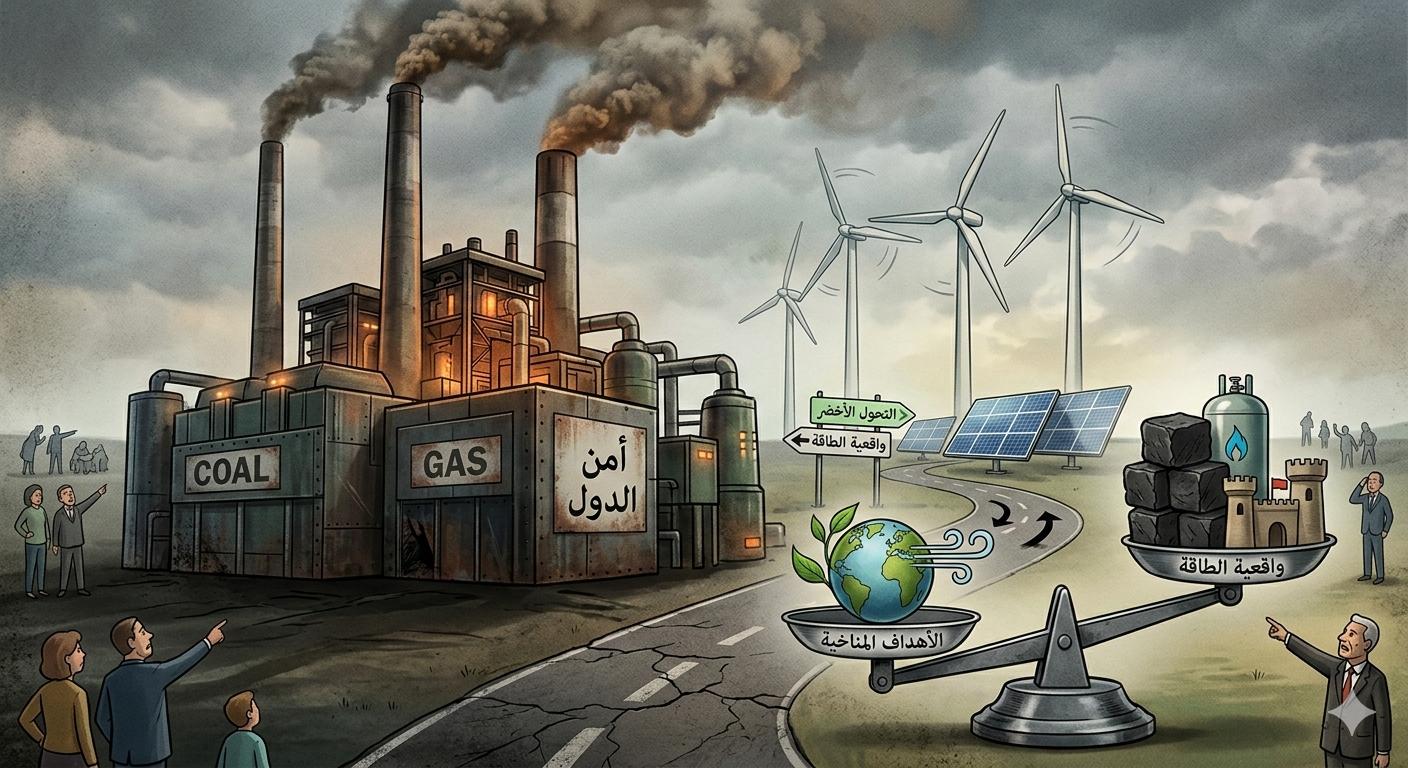
For the better part of a decade, the global narrative was singular: a rapid, uncompromising shift toward renewable energy. But as we navigate 2026, the idealistic “Green Transition” is hitting a wall of cold, hard reality. From the manufacturing hubs of Europe to the growing economies of Asia, a new era has dawned—the era of Energy Realpolitik.
The Shift from Idealism to Energy Realism
The term “Realpolitik” traditionally refers to politics based on practical objectives rather than ideals. In the energy sector, this translates to Energy Realism: the acknowledgment that while net-zero targets are noble, the primary duty of a state is to ensure the lights stay on and the economy remains competitive.
Recent geopolitical tensions and supply chain disruptions have proven that wind and solar, while growing, cannot yet replace the baseload stability provided by traditional fuels. This realization has sparked a controversial but necessary return to fossil fuels in many developed nations.
Analysis: The Return to Coal and Gas
The resurgence of coal and gas isn’t a rejection of science; it is a response to security crises. National security is now synonymous with energy security.
- The European Pivot: Countries that once spearheaded the anti-coal movement have been forced to restart mothballed coal plants to offset the loss of pipeline gas.
- The Gas Bridge: Natural gas, once viewed as a “temporary” bridge fuel, is being re-evaluated as a long-term necessity for grid balancing.
- Supply Chain Vulnerability: The realization that the “Green Revolution” relies heavily on mineral monopolies (like lithium and rare earth elements) has made leaders wary of trading one form of energy dependence for another.
National Security vs. Climate Goals: The Great Deceleration
Are climate goals being abandoned? Not entirely, but they are being deprioritized. When a government faces the choice between missing a 2030 carbon target or facing mass blackouts and industrial collapse, the choice is always the latter.
Why “Realism” is Winning
- Industrial Competitiveness: High energy costs in green-heavy regions are driving industries to move where energy is cheaper and more reliable.
- Social Stability: Energy poverty—where citizens cannot afford heating or cooling—is a fast track to political upheaval.
- The Intermittency Problem: Storage technology (batteries) has not scaled fast enough to handle the “Dunkelflaute” (periods of no wind or sun).
The Future: A “Both/And” Approach
The “Death of the Green Transition” might be a hyperbolic title, but it accurately describes the death of the ideology—the belief that the transition would be easy, cheap, and linear.
Moving forward, we expect to see a hybrid model. This involves aggressive investment in Nuclear Energy, a renewed respect for Domestic Natural Gas, and a strategic, slower integration of renewables that doesn’t compromise the power grid’s integrity.
Key Takeaway: Energy Realpolitik isn’t about climate denial; it’s about survival. In an unstable world, energy security is the foundation upon which all other policies, including environmental ones, must be built.
