
The Future of African Football and the Legacy of CAN 2025 in Morocco
The "Diaspora Effect" and Global Icons

Achawari.com
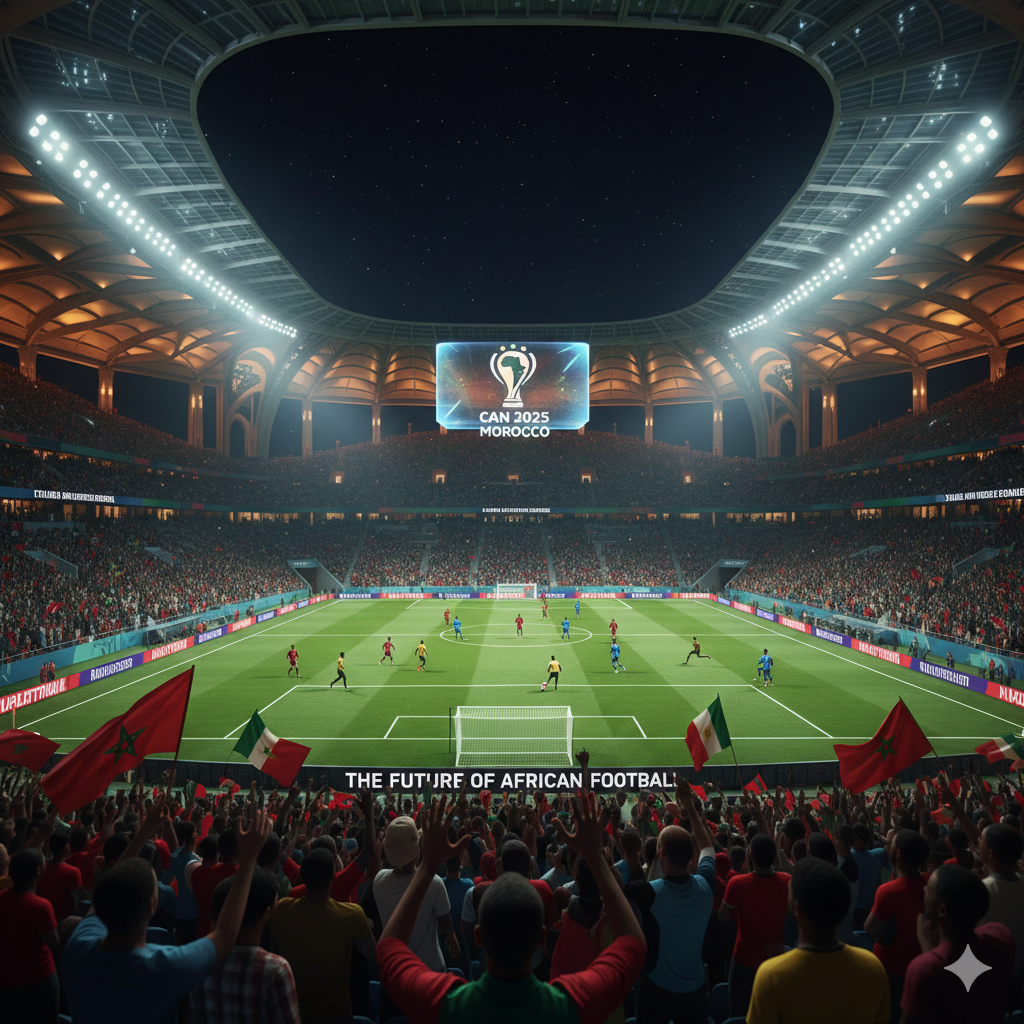
The 35th edition of the Africa Cup of Nations (CAN 2025), currently unfolding across the vibrant landscapes of Morocco, is more than just a month-long football tournament. It represents a watershed moment—a “Great Leap Forward” for a continent that has long been a talent exporter but is now positioning itself as a global footballing hub.
As the matches progress in world-class venues from Tangier to Agadir, the tournament is providing a blueprint for the future of African football. In the light of the ongoing spectacle, here is how the landscape of the beautiful game in Africa is changing forever.
- World-Class Infrastructure as the New Standard
One cannot discuss CAN 2025 without mentioning the sheer quality of the venues. Morocco has deployed nine state-of-the-art stadiums across six host cities. The Prince Moulay Abdellah Complex in Rabat and the Mohammed V Stadium in Casablanca are not just hosting matches; they are making a statement.
- Engineering Resilience: Despite heavy winter rains in late December, the advanced drainage systems integrated into these stadiums have kept the pitches in pristine condition.
- Logistical Mastery: With high-speed trains (Al Boraq) and seamless transportation links, Morocco has proven that an African nation can deliver logistics on par with European championships.
This infrastructure is a dress rehearsal for the 2030 FIFA World Cup. By setting the bar this high, CAF (Confederation of African Football) is signaling that “good enough” is no longer the standard for African hosting duties.
- The Shift in Competitive Parity
The group stages of CAN 2025 have confirmed a thrilling trend: the “smaller” nations have vanished. The gap between traditional giants like Egypt, Senegal, and Nigeria and emerging forces like Comoros and Sudan has narrowed significantly.
“Success increasingly depends on squad cohesion and tactical discipline rather than individual star power alone.”
We are seeing a more sophisticated African game. Teams are now better organized defensively and more clinical on the counter-attack. This tactical evolution suggests that in the coming years, African teams will no longer just “participate” in global competitions but will be legitimate contenders for the World Cup title.
- The “Diaspora Effect” and Global Icons
The 2025 edition has highlighted the growing influence of the African diaspora. Over 40% of the players in this tournament were born or trained in Europe but have chosen to represent their ancestral roots.
The inclusion of stars like Brahim Diaz, who made a high-profile switch from Spain to Morocco, has brought a new level of technical quality and global marketing appeal to the tournament. When players of this caliber choose AFCON over European commitments, it elevates the prestige of the continental trophy to a global scale.
- Economic Maturity and Media Rights
For the first time, CAN is a certified commercial powerhouse.
- Record Broadcasting: CAF secured 20 media rights partnerships across over 30 European territories. For the first time, all 52 matches are being broadcast free-to-air in the UK via Channel 4.
- Revenue Growth: Projected revenues for this edition stand at approximately $192.6 million, with a significant portion being reinvested into youth academies and domestic leagues across all 54 member associations.
This financial stability allows CAF to transition from a biennial struggle to a structured, profitable business model.
- Beyond 2025: The African Nations League
The future looks even more structured. CAF President Patrice Motsepe recently announced the introduction of an annual African Nations League (set to debut after 2028/2029). This will provide:
- More frequent high-stakes matches for homegrown talent.
- Consistent revenue streams for smaller federations.
- Better synchronization with the global FIFA calendar.
The Verdict
The CAN 2025 in Morocco is the bridge between the old era of “potential” and a new era of “professionalism.” As we watch the knockout rounds intensify, it is clear that African football is no longer just about flair and individual brilliance; it is about infrastructure, tactical sophistication, and economic independence.
The star of the tournament isn’t just the player lifting the trophy in Rabat on January 18—it’s the continent itself, finally claiming its seat at the head of the global football table.
