
The Future of Multi-Factor Authentication: Beyond Passwords in 2026

achawari.com
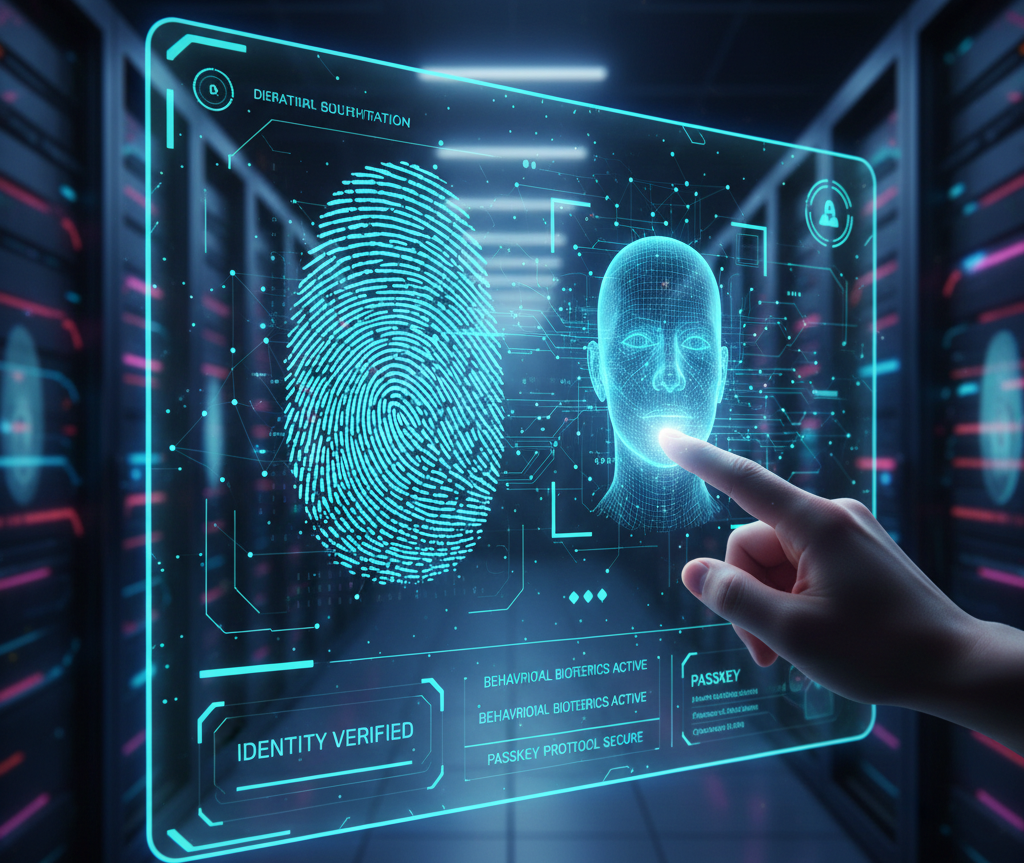
The era of the traditional password is coming to an end. For decades, the “username and password” combination was the primary line of defense for our digital lives. However, in 2026, with the rise of AI-powered credential stuffing and sophisticated phishing, passwords have become the weakest link in the security chain. The Future of Multi-Factor Authentication (MFA) is shifting toward a “Passwordless” world, where identity is verified through biology, behavior, and hardware, rather than a string of characters.
Why Traditional MFA is No Longer Enough
While SMS-based codes and email verification were significant improvements, they are no longer secure against 2026 threats. Cybercriminals now use “MFA Fatigue” attacks—bombarding a user with push notifications until they accidentally hit “Approve”—and “SIM Swapping” to intercept codes. To counter this, the industry is moving toward “Phishing-Resistant MFA.”
Key Trends Shaping Authentication in 2026
- The Rise of Passkeys and FIDO2 In 2026, Passkeys have become the standard for both consumer and enterprise applications. Built on FIDO2 standards, Passkeys use public-key cryptography to verify identity. Instead of remembering a password, your device (phone or laptop) creates a unique cryptographic pair with the website. This method is inherently resistant to phishing because there is no password to steal.
- Behavioral Biometrics: The Invisible Layer Beyond fingerprints and facial recognition, 2026 has introduced “Behavioral Biometrics.” This technology monitors how you interact with your device—the rhythm of your typing, the angle at which you hold your phone, and even your gait. If a hacker steals your unlocked phone, the system will detect a change in behavior and instantly trigger a lock, adding a continuous layer of Zero Trust Security.
- Hardware Security Keys For high-value targets, such as financial administrators or government officials, physical hardware keys (like YubiKeys) remain the gold standard. These USB or NFC devices require a physical touch to authorize a login. As highlighted in our Advanced Ransomware Prevention Strategies, hardware keys are the only way to guarantee that an attacker halfway across the world cannot compromise an account, even if they have the username and password.
Adaptive and Contextual Authentication
In 2026, authentication is no longer a “one-size-fits-all” process. Adaptive MFA uses AI to evaluate the risk of every login attempt in real-time.
- Low Risk: Logging in from your home office on a recognized device might only require a fingerprint.
- High Risk: Attempting to access sensitive financial data from a new location at 2:00 AM will trigger multiple challenges, including biometric scans and hardware key verification.
Identity in the Multi-Cloud Era
As businesses navigate Cloud Security Compliance, managing identities across multiple cloud providers has become a major challenge. In 2026, “Identity Orchestration” platforms are used to unify MFA policies across AWS, Azure, and Google Cloud, ensuring that a user has one secure identity that follows them across the entire corporate ecosystem.
Protecting Against AI-Driven Identity Theft
As we explored in our guide on AI-Driven Cyber Attacks, AI can now clone voices and faces. This has led to the development of “Liveness Detection” in 2026. Modern biometric systems now check for blood flow, micro-movements, and infrared depth to ensure they are looking at a real human being and not a high-resolution deepfake or a photograph.
Conclusion: The Human-Centric Security Future
The future of MFA is not just about more security; it’s about better usability. By moving away from passwords and toward seamless, biometric, and behavioral verification, we are creating a digital world that is both harder to hack and easier to use. In 2026, your identity is not something you “know” (like a password), but something you “are.” Embracing these advanced authentication trends is the final step in building a truly resilient digital infrastructure.
