
The Cruel Destiny of Mohamed Choukri: Did “For Bread Alone” Deserve a Nobel?
The Bitter Triumph of North Africa's Most Uncompromising Writer

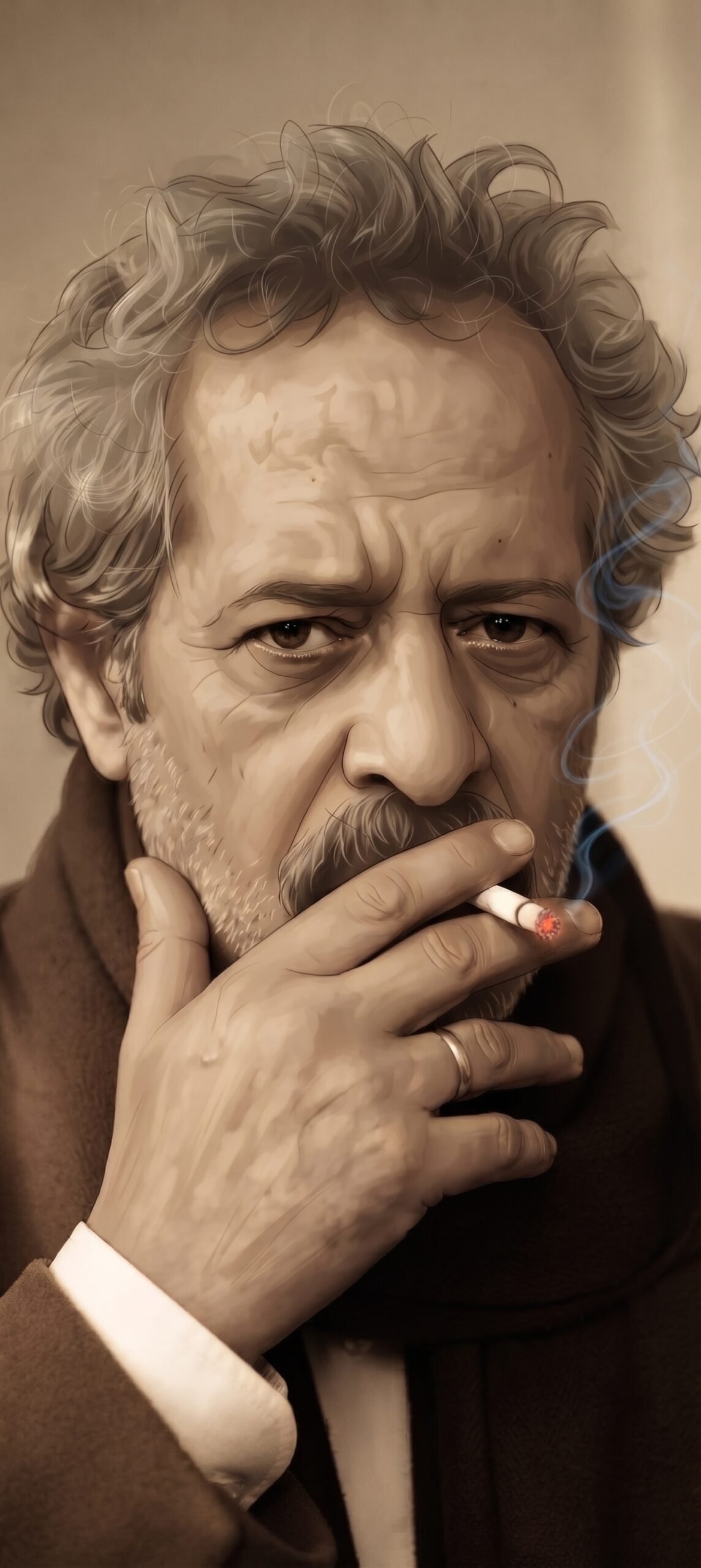
The Moroccan literary giant, whose raw masterpiece was translated into 37 languages, carried an earthly burden of injustice. But perhaps, in the quiet beyond, he has finally found the recognition denied to him here.
In the pantheon of North African literature, few figures loom as large, or as controversially, as Mohamed Choukri. To enter Choukri’s world is to step into the unforgiving alleyways of Tangier and Tetouan during the mid-20th century—a world of visceral poverty, hunger, sex, and desperation.
Choukri was not just an observer of this underworld; he was its architect, crafting it into a literary monument known as “For Bread Alone” (Al-Khubz al-Hafi).
This seminal autobiography, written in the 1970s but banned for years in much of the Arab world due to its uncompromising honesty, became a global phenomenon. It has been translated into 37 languages, cementing Choukri’s place as a writer of international consequence.
Yet, as we look back at his legacy, one question frequently arises among critics and readers alike, a question tinged with the bitterness of what might have been: Was Mohamed Choukri not deserving of the Nobel Prize in Literature?
A Life Forged in Misery
To understand Choukri’s writing, one must understand the depth of his suffering. His childhood was not merely difficult; it was a relentless assault on the human spirit.
Born into abject poverty in the Rif Mountains during a famine, Choukri witnessed his father murder his own brother in a fit of rage. The family fled to Tangier in search of survival, only to find deeper destitution. Choukri grew up scavenging, stealing, and working as a child laborer.
His youth was characterized by a profound, existential restlessness. He lived the life of a hobo, sleeping in cemeteries, falling into addiction, and navigating the darkest corners of society.
Remarkably, Choukri did not learn to read or write until he was 20 years old. Recognizing that literacy was his only escape from the cycle of poverty, he dedicated himself to education with a ferocity that matched his previous struggle for survival.
The Nobel Question
Given the global impact of “For Bread Alone” and his subsequent works (Streetwise and Temptation of the White Gull), many argue Choukri’s omission from the Nobel conversation was a glaring oversight.
The Nobel committee often favors writers who address universal human experiences with stylistic innovation. Choukri did precisely that. He pioneered a style of “zero-degree writing”—bare, unflinching, and stripped of all romanticism or moralizing. He did not ask the reader to pity the protagonist; he simply forced them to witness him.
His work was compared to Jean Genet and Samuel Beckett—writers who also stared into the abyss of the human condition. If a writer’s worth is measured by their ability to break taboos and give voice to the voiceless, Choukri was a titan.
Perhaps the committee found his work too provocative, too raw. Perhaps the political climate surrounding Moroccan letters during his life played a role. Regardless, the fact remains that one of the most widely read and translated authors of the 20th century was never bestowed with literature’s highest honor.
A Sense of Injustice
This oversight brings us to the tragedy of Choukri’s final years.
Despite achieving international fame and becoming a beloved figure in his adopted city of Tangier, Choukri carried a deep, psychological wound. He never fully healed from the brutal traumas of his childhood. He often expressed a bitter feeling of being misunderstood, or unappreciated at home, and perhaps even overlooked by the global literary establishment.
He departed this earth in 2003, leaving behind a feeling that the world had not yet balanced the scales of justice in his favor.
However, for those who believe in a moral universe beyond our own, there is comfort in a different kind of justice. The suffering and injustice Mohamed Choukri experienced on this planet—the wretched poverty, the hunger, the rejection—have been washed away.
In the quiet beyond, where earthly honors and committees hold no sway, Choukri has undoubtedly found the true appreciation and peace that he so rightly earned through his courageous pen. He is no longer “For Bread Alone.” He has found the feast that was denied to him in life.
Rest in peace, Mohamed Choukri. Your words have secured your eternity, even if the Nobel did not.
