

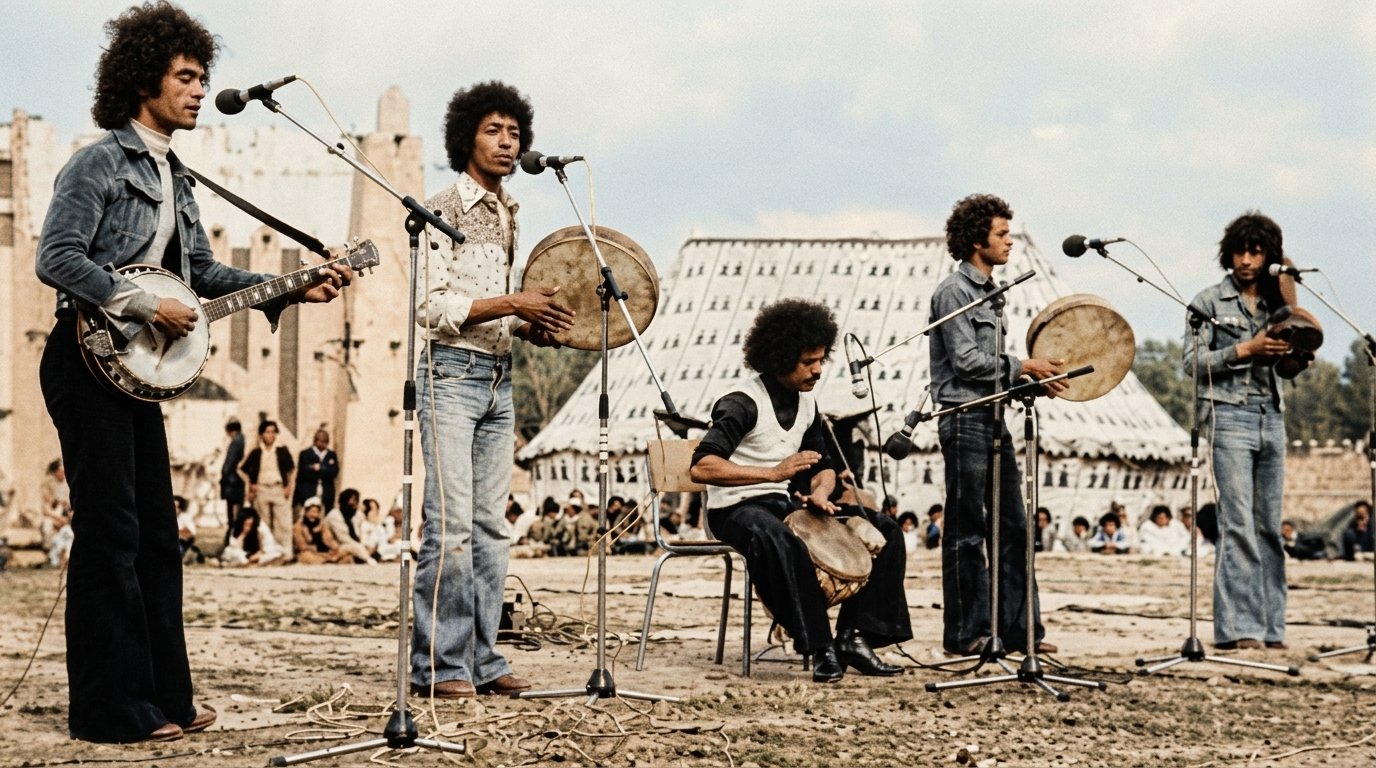
Achawari
In the history of modern Moroccan music, socially conscious song has rarely been just background entertainment for a passing mood. At its strongest, it has served as a living archive of collective memory—a mirror reflecting social questions, human dignity, and emotional resilience. Within that current, Izenzarne emerged as one of the most distinctive musical groups to restore weight to poetic lyrics and roots-grounded rhythm at a time when artists were searching for a voice connected to land, identity, and everyday life.
Re-examining Izenzarne today is not merely an exercise in nostalgia for a particular era. It raises a broader cultural question: How did a musical group turn poetry and traditional instruments into an enduring social and emotional voice across generations, and what allows committed music to outlast shifting trends?
Artistic Roots and the Cultural Context of Izenzarne
Izenzarne took shape during a vibrant period of Moroccan artistic and cultural ferment in the 1970s, when young musicians, writers, and listeners gravitated toward re-examining oral and popular traditions and giving them a contemporary musical form.
Rather than treating heritage as a static museum piece, that movement sought a musical and poetic vocabulary capable of speaking to a generation navigating change without severing ties to its cultural foundations—an impulse that resonates with the spirit of safeguarding living expressions highlighted across UNESCO living cultural heritage listings for Morocco.
What Defined the Izenzarne Experience
What gave Izenzarne a lasting place in Moroccan cultural memory was the interplay of several artistic elements:
Poetic Density and Symbolism: The lyrics relied on concentrated imagery, metaphor, and proverbial wisdom, allowing songs to read like self-contained poems that balance directness with layered meaning.
Commitment to Traditional Instruments and Rhythm: The group blended stringed and percussion traditions rooted in local soundscapes, creating an arrangement that paired rhythmic drive with warmth and restraint.
Engagement with Human and Social Themes: Their repertoire spoke to lived realities, social shifts, solidarity, memory, and shared human concerns rather than chasing fleeting commercial formulas.
Collective Harmony: Interlocking voices and ensemble interplay turned performance into a shared communal act, drawing listeners into the emotional arc of the song rather than keeping them at arm’s length.
Why Committed Music Endures Across Changing Tastes
In an era of rapid digital cycles and short-form attention spans, reflective and poetic music can look swimming against the tide. Yet the staying power of Izenzarne points to three durable reasons why serious art endures:
Artistic Sincerity Ages Well: Songs anchored in genuine lived experience and moral clarity retain emotional weight even as production styles and listening habits evolve.
Bridging the Local and the Universal: Music rooted in a distinct cultural environment can speak across borders and eras when its themes touch universal human struggles and aspirations.
Rediscovery by New Generations: Whenever a younger generation confronts questions of belonging, meaning, and social change, it often returns to earlier works that carry intellectual and emotional depth.
Conclusion: Memory Kept Alive Through Word and Melody
Izenzarne remains a testament to how Moroccan music—when it pairs heritage, craft, and social awareness—can outlive the moment of its creation. Honest words and balanced melody remain among the hardest things to replace when public taste shifts, reminding cultural platforms and audiences alike of the value of work that respects both mind and heart.
