
Achawari
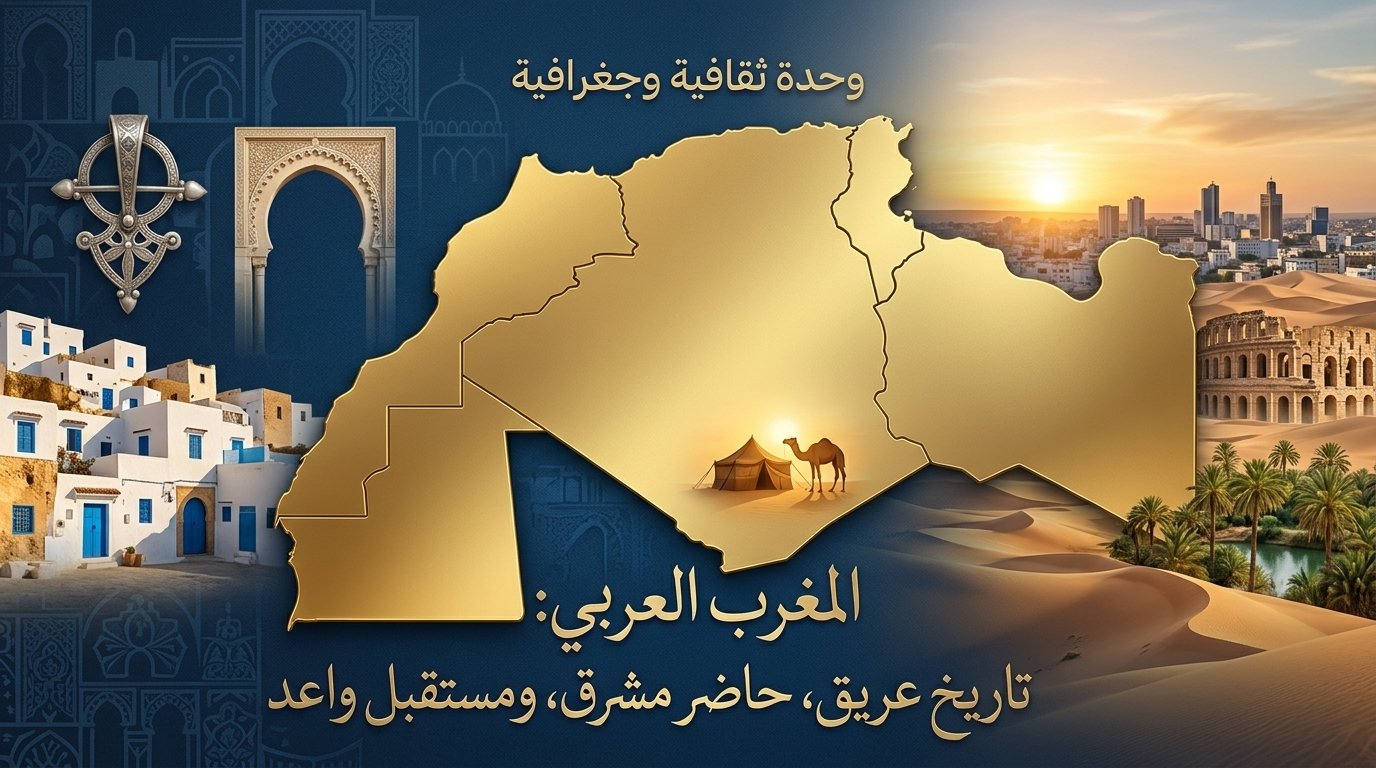
Few regional groupings in modern international relations embody the gap between high-minded rhetoric and stubborn reality quite like the Arab Maghreb Union. Established in February 1989 with the Treaty of Marrakech, the bloc was envisioned as a practical vehicle for economic cooperation, shared security, free movement, and collective diplomatic weight across North Africa. Its founding members—Algeria, Libya, Mauritania, Morocco, and Tunisia—shared deep historical threads, overlapping cultural and linguistic ties, coastal gateways along the Mediterranean and Atlantic, and complementary economic profiles.
More than three decades later, however, the Arab Maghreb Union remains largely frozen on paper. Summits of heads of state have rarely convened at full strength, border crossings between key neighbors have remained closed or heavily restricted for long stretches, and intra-regional trade has lingered among the lowest of any comparable economic grouping in the world. What was meant to be a stepping stone toward a unified, prosperous North African space has instead become a case study in deferred dreams and costly fragmentation.
The Promise of 1989: A Vision Built on Complementarity
When leaders signed the founding framework of the Arab Maghreb Union in 1989, the international environment was shifting rapidly. Cold War rigidities were loosening, global trade was beginning to organize around larger regional markets, and North African states faced mounting economic pressures that pointed toward the value of pooling strengths rather than competing in isolation.
The economic logic of integration was straightforward and compelling:
Resource and market complementarity: Energy-rich economies in the region could pair with manufacturing, agricultural, and service capacities in neighboring states, while a combined market of roughly a hundred million-plus consumers offered economies of scale that no single domestic market could match alone.
Geographic bridge role: Positioned between Europe, Sub-Saharan Africa, the Mediterranean, and the Atlantic, a coordinated Maghreb could serve as a major logistics, energy, and transit hub rather than a patchwork of disconnected national bottlenecks.
Stronger global bargaining power: Speaking with a more coherent voice in negotiations with major trading partners, financial institutions, and multilateral bodies would give North African countries greater leverage than fragmented bilateral approaches.
Why Integration Stalled: Political Fault Lines Over Economic Logic
Economic complementarity alone does not build regional institutions when deep political rivalries stand in the way. The paralysis of the Arab Maghreb Union stems from overlapping geopolitical disputes, mutual suspicion, and domestic political dynamics that repeatedly subordinated shared prosperity to zero-sum power calculations.
1. The Moroccan Sahara Dispute and Bilateral Ruptures
The central fault line paralyzing Maghreb cooperation has long been the conflict over Moroccan Western Sahara, which has pitted Morocco and Algeria against one another in a protracted diplomatic standoff. Because institutional decision-making within the Arab Maghreb Union relies heavily on consensus and political goodwill among core members, unresolved sovereignty and security disputes turned the bloc’s highest decision-making bodies into arenas of deadlock rather than problem-solving. Over time, periodic border closures, severed diplomatic ties, and security mistrust froze joint initiatives that required everyday operational coordination.
2. Domestic Instability and Shifting Priorities
Integration requires stable state institutions capable of honoring long-term commitments across changing political climates. Civil conflict and protracted instability in Libya after 2011 removed a foundational pillar of regional connectivity and turned a prospective partner into a source of security spillover, arms flows, and governance uncertainty. Meanwhile, other countries in the region navigated economic strain, social pressures, and political transitions that pulled leadership attention inward toward immediate survival and domestic legitimacy rather than ambitious regional institution-building.
3. Weak Institutional Teeth and Unenforced Commitments
Unlike regional bodies that gradually built binding rules, dispute-resolution mechanisms, and supranational or well-funded technical organs, the Arab Maghreb Union never developed strong institutional enforcement. Treaties and protocols were signed with fanfare, yet implementation lagged behind declarations. Without independent momentum, technical agencies starved of resources, and political backing at the top, cooperation remained vulnerable whenever bilateral tensions flared.
4. Divergent External Alignments
Rather than forging a common external posture, Maghreb states often pursued separate bilateral tracks with European partners, Gulf states, or global powers. While individual countries secured bilateral deals or investments, the absence of a coordinated regional strategy weakened collective leverage and sometimes turned external relationships into another lens of regional rivalry.
The Price Tag: What Lost Opportunities Cost North Africa
The cost of a stalled Arab Maghreb Union is not merely diplomatic or symbolic; it shows up in forgone growth, higher transaction costs, and missed strategic windows. As noted in broader World Bank regional perspective on Middle East and North Africa, economic fragmentation, high trade barriers, and weak regional integration weigh heavily on private investment, job creation, and resilience across the wider region.
Depressed intra-regional trade: Trade among Maghreb neighbors remains a tiny fraction of their total commerce, even though geographic proximity should make regional exchange natural for agricultural goods, building materials, manufactured inputs, and services.
Higher logistics and energy costs: Closed land borders, fragmented transport corridors, and unintegrated power and gas grids force goods and energy to take longer or costlier detours, raising expenses for businesses and households alike.
Lost appeal to global investors: International manufacturers and supply chains increasingly look for integrated regional markets where they can produce in one country and sell seamlessly across neighboring borders. Fragmentation shrinks the scale needed to attract large, job-rich export industries.
Weakened youth horizons: North Africa faces persistent pressure to generate quality employment for a large, educated, and restless youth population. Every decade of stalled regional integration narrows cross-border mobility, educational exchange, entrepreneurial collaboration, and shared market opportunities.
Pragmatic Pathways: How Partial Progress Could Still Matter
Waiting for a sudden, total resolution of every historical and geopolitical dispute before taking a single practical step guarantees further stagnation. If full political reconciliation remains difficult in the near term, realistic progress around the Arab Maghreb Union or broader North African cooperation depends on incremental pragmatism:
Start with functional, low-friction dossiers: Focus first on practical areas where mutual interest is obvious—such as maritime safety, disaster response, climate and water research, customs digitization, or targeted cross-border infrastructure corridors—before tackling the hardest political questions.
Empower business communities and civil society: Chambers of commerce, universities, researchers, and cultural exchanges often see shared interests faster than diplomats. Creating predictable rules for trade facilitation and professional exchange builds constituencies that benefit from openness.
Separate technical cooperation from political posturing: Where possible, insulate technical and economic working groups from daily political headlines so routine cooperation does not collapse every time diplomatic rhetoric sharpens.
Align Maghreb connectivity with broader African and Mediterranean links: Viewing North African integration not as an exclusive bubble, but as a bridge linking Mediterranean markets with West and Central African trade corridors, can give every regional state a stake in smoother transit and shared standards.
Conclusion: Between History’s Burden and Tomorrow’s Necessity
The tragedy of the Arab Maghreb Union is not that its founding vision was naive; rather, it is that generations of North Africans have paid the price of political rigidity while the rest of the world has organized into larger, more agile economic spaces. Geography has already bound the countries of the Maghreb into a shared neighborhood facing common pressures—from climate stress and water scarcity to global economic shifts and demographic aspirations.
Deferred dreams do not have to become permanent defeats. Whether the Arab Maghreb Union is eventually revitalized through new political will or surpassed by more pragmatic forms of regional cooperation, North Africa’s future will look brighter the moment leaders treat shared prosperity not as a concession to a rival but as a vital necessity for their own citizens.
