

Achawari
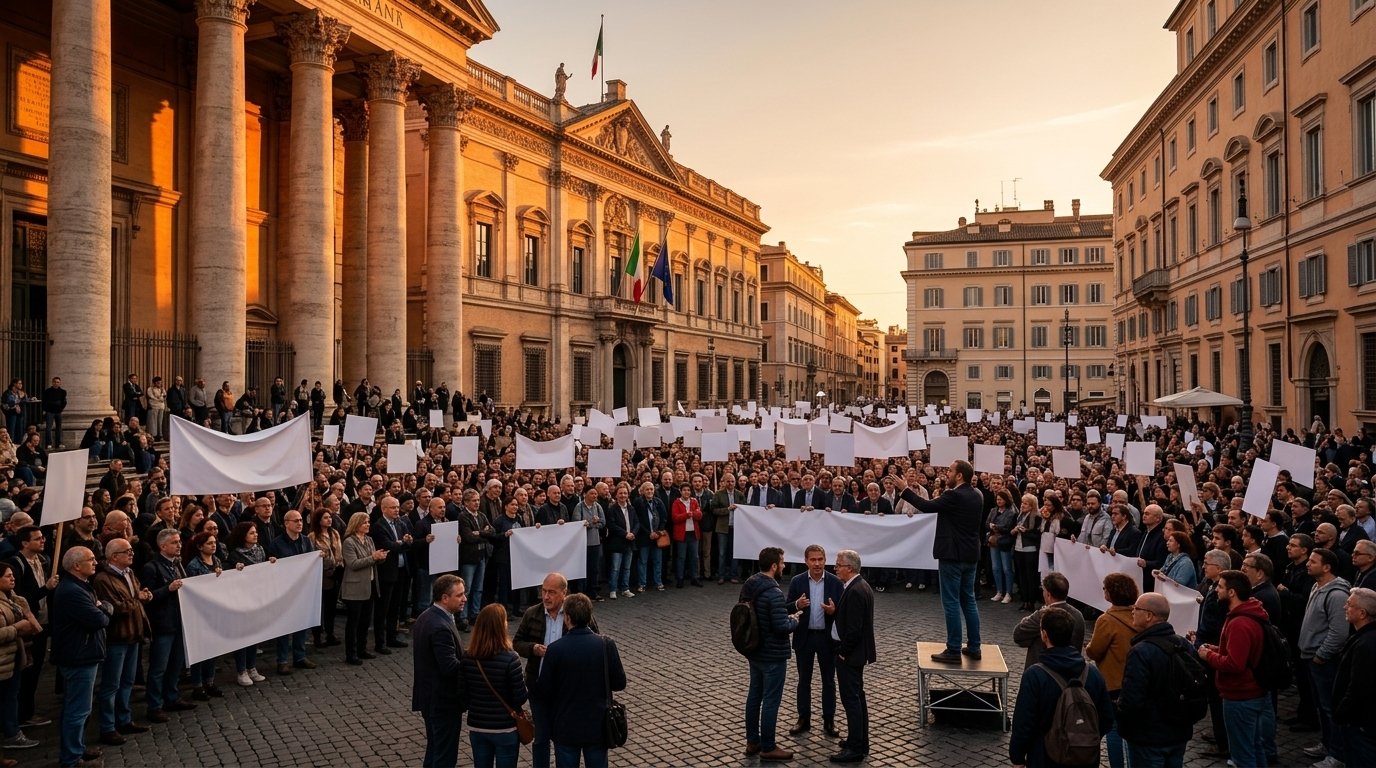
Across major European capitals and industrial towns alike, street demonstrations, labor strikes, and public discontent have become a recurring feature of political life. To many mainstream commentators, each wave of unrest is treated as a separate local flare-up—a dispute over pension ages in one country, inflation and energy bills in another, agricultural subsidies somewhere else, or austerity budgets in a fourth.
For American Marxian economist Richard D. Wolff, however, viewing these movements as isolated episodes misses the deeper structural story. In his recurring commentary on “Real Democracy” and the rise of protests across Europe, Wolff argues that widespread public anger reflects a widening gap between formal political democracy—casting a ballot every few years—and everyday economic reality, where ordinary citizens feel increasingly powerless over the decisions that shape their livelihoods.
At the heart of Richard D. Wolff’s argument is a deceptively simple question: What does democracy actually mean if it stops at the door of the workplace and the boardroom?
In modern Western democracies, citizens enjoy constitutional rights to vote, speak, and organize. Yet Wolff contends that for roughly eight hours a day, five days a week, most working adults enter institutions—corporations, banks, and large enterprises—that are organized along strictly top-down, non-democratic lines. A small circle of major shareholders and appointed executives decides:
What gets produced and how resources are allocated.
Where factories or offices operate, including whether jobs are relocated abroad.
How profits are distributed between executive compensation, dividends, share buybacks, and worker wages.
When governments then respond to economic slowdowns, inflation, or debt pressures by cutting public services, raising retirement ages, or shielding corporate balance sheets while households absorb higher living costs, voters begin to suspect that elections change faces without altering fundamental economic priorities. As discussed in the broader Stanford Encyclopedia of Philosophy overview of democratic theory, debates over whether democracy requires substantive social and economic equality—rather than procedural voting alone—have long divided political thinkers.
Why European Protests Keep Returning
Europe has historically prided itself on balancing market capitalism with a robust social safety net—public healthcare, accessible education, labor protections, and collective bargaining. Wolff’s analysis points to several converging pressures that have strained that post-war social contract and fueled recurring street protests:
1. The Erosion of Real Purchasing Power
Even when headline inflation cools from peak spikes, cumulative price increases in housing, food, utilities, and transport leave millions of working- and middle-class households feeling poorer than they were a decade ago. When wages lag behind everyday necessities, economic frustration quickly turns into political alienation.
2. Austerity, Fiscal Rules, and Shrinking Public Services
Tight budget constraints and competing geopolitical spending priorities have often translated into pressure on healthcare systems, public transit, education, and pension schemes. Citizens who pay taxes expecting reliable public infrastructure increasingly experience longer waits and thinner support—a tangible reminder that policy trade-offs rarely fall evenly across social classes.
3. Distrust in Established Political Parties
Across much of Europe, traditional center-left and center-right parties have struggled to convince voters that they offer genuinely distinct economic paths. When major parties converge around similar fiscal and corporate-friendly policies, discontent spills outside parliamentary channels into street protests, wildcat strikes, and populist swings.
What Wolff Means by “Real Democracy”
Rather than treating protest solely as disorder, Richard D. Wolff frames persistent mobilization as a symptom of an incomplete democratic project. In his view, moving toward “real democracy” requires extending democratic accountability from the political sphere into the economic sphere itself:
Workplace Democracy and Worker Cooperatives: Wolff frequently highlights democratic enterprises—such as worker-owned cooperatives—where employees collectively participate in governing the firm, electing management, and deciding how surpluses are reinvested or shared.
Public Accountability Over Strategic Sectors: Essential goods—housing, energy, healthcare, and basic infrastructure—cannot be governed purely by short-term profit maximization without generating recurring social crises.
Civic Participation Beyond Election Day: Meaningful democracy depends on active unions, community assemblies, independent journalism, and informed public debate capable of holding both state institutions and concentrated private wealth to account.
Strengths and Limits of Wolff’s Perspective
Engaging seriously with Richard D. Wolff’s ideas does not require accepting every premise uncritically. Rather, his critique is valuable precisely because it sharpens questions that conventional economic commentary often avoids:
Where his analysis hits the mark: Wolff captures the lived sense of powerlessness felt by millions of workers who see productivity and corporate profits rise while their own economic security feels increasingly fragile. His distinction between formal political rights and substantive economic voice helps explain why voter cynicism and street protests coexist in established democracies.
Questions critics raise: Skeptics and mainstream economists often counter that large-scale cooperative models face hurdles in raising capital, scaling rapidly, or navigating global competition, and that not every European protest stems from anti-capitalist sentiment—some reflect cultural anxieties, regional grievances, or competing demands over energy transition and trade.
Holding both insights together gives readers a clearer lens: even where one disagrees with Wolff’s preferred remedies, his diagnosis points directly to the legitimacy crisis facing modern economic governance.
Conclusion: A Question Beyond Europe
The recurring protests across are a reminder that democracy is never a finished monument; it is a living compact that depends on whether ordinary people feel heard, respected, and economically secure. When citizens conclude that major decisions are locked away behind technocratic rules and boardroom priorities, discontent inevitably finds its way into the streets.
By insisting on the link between economic fairness and democratic legitimacy, Richard D. Wolff challenges societies—not only in Europe, but anywhere grappling with inequality and public disillusionment—to ask what kind of democracy they actually want: a ritual performed every few years at the ballot box, or a shared voice in shaping everyday life.
